Donald Eugene Bonham
(1940 – 2014)
Don Bonham was a colourful individualist, an irreverent outsider with a fantastical artistic vision that reinvigorated figurative sculpture in fresh new ways, challenging suppression of the sexual body while expanding perspective on the all-pervasive technological world around us and our conflictive place within it. He was an inspiring mentor to numerous art students, a godfather to more than eighty apprentices, and a surprising and formidable anomaly in the art world.
Bonham was born on November 9, 1940 at the height of the American oil boom in an oil field in the town of Moore, which is located in Tornado Alley and is today considered part of the Oklahoma City metropolitan area. After a turbulent adolescence, he enlisted in the U.S. Marine Corps and served in an elite Recon unit in S.E. Asia. Upon his honorable discharge, he studied at the University of Oklahoma as an Art History Major.
Bonham came to prominence as a visual artist when he moved to Canada (London, Ontario) in 1968, quickly achieving international notoriety for his highly original, finely crafted, figurative fibreglass sculpture based on evocative human/technology hybrids – motorcycles, cars, boats, airplanes, and helicopters fused with casts of the female body. With feature articles appearing in Playboy magazine in the 1970s, his approach to making art was viewed by the international art critic Edward Lucie-Smith as more firmly integrated with North American popular culture than the work of celebrated Pop Art practitioners Roy Lichtenstein and Andy Warhol.
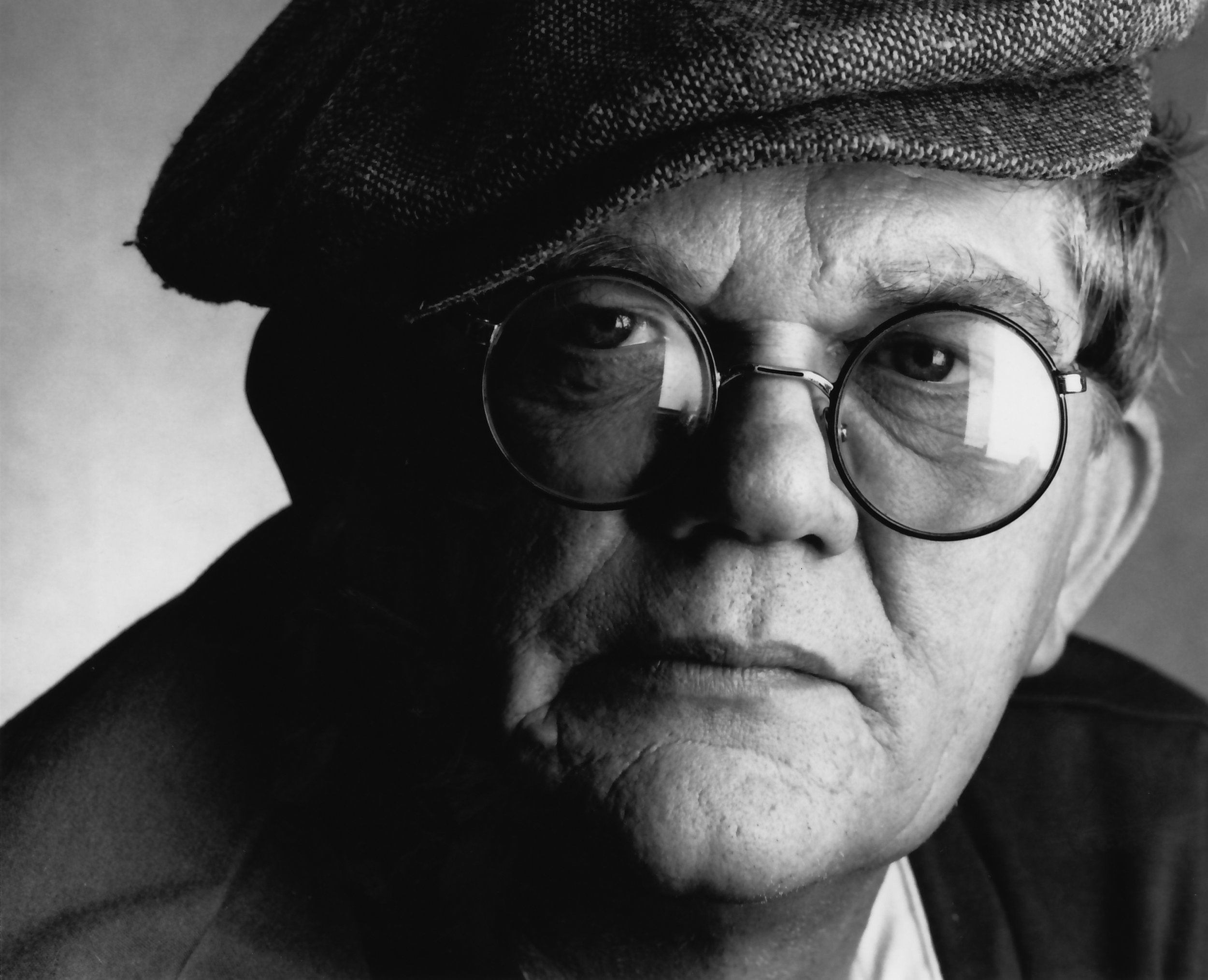
Don Bonham, 1984, Photo: John Reeves
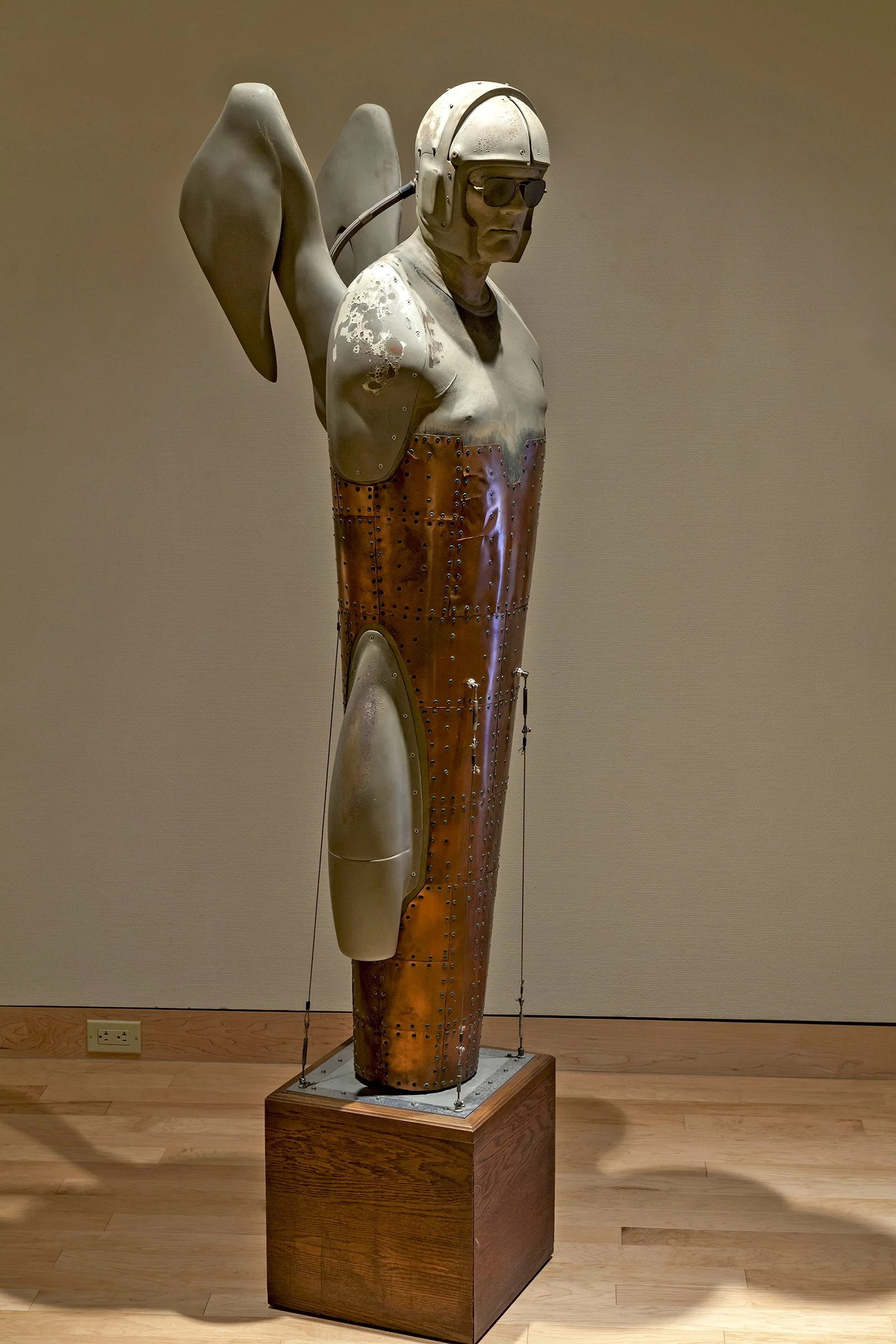
Why Angels Can't Fly, 1988, fibreglass and mixed media, 75” x 21” x 19”
Characterized by uncompromising attention to technical detail and finish, Bonham’s visionary art merged fantasy and reality, parodic humour and eroticism, high tech and low tech, and high art and low art in a life-long exploration of the physical, symbolic, and psychological relationships between humankind and machines. Through a personal, yet universally accessible, visual language, he shone a light on the greatest of human urges – sex and death – and the enduring hold of mythology on human culture.
In 1975, Bonham was the first American visual artist to be appointed to the Royal Canadian Academy, and in 1997, he was awarded the Alex J. Ettl Grant from the National Sculpture Society for lifetime achievement as a sculptor. Over the course of his career, he exhibited his work in both one-person and group exhibitions in New York City, Chicago, Florida, Montreal and Toronto, among other places, including at the Museum of Modern Art in Paris, France. A major retrospective exhibition Don Bonham RCA: Stranger in a Familiar Land was presented at the Beaverbrook Art Gallery, New Brunswick in 2012.
Bonham had a series of teaching appointments in both Canada and the United States. He was a popular and effective educator who involved many of his students in his projects, often hiring them as apprentices to work in the various studios he operated in London, Montreal, Toronto, Florida, New York City, and Salisbury Mills in New York’s Hudson Valley. Called “an intelligent rebel,” “the bad boy of the Canadian art establishment,” “the original cyber-punk artist,” and “the Evel Knievel of the art world,” Bonham personified the machines he created by living life and making art at full throttle. He stated: “What made me a good artist was that I didn’t have a lot of things growing up, so I had to make them. There’s nothing better than working hard to create something you’re proud of and excited by. It’s almost better than sex.”
Over the course of his life, Bonham strove to overcome countless obstacles and setbacks, an experience expressed with self-deprecating humour by the glorious failures of his alter ego and anti-hero Hermen Goode. Jokingly, he once stated, “I’ve made an art out of being totally incompetent.” In his signature self-portrait Why Angels Can’t Fly (1988), he portrays himself as a high-tech angel wearing a pilot’s helmet, simultaneously enhanced and constrained by technology. Although he is all set to fly, he is tightly encased in a sarcophagus form and tethered to the ground with aircraft cables.
Reflecting on his remarkable life’s journey, Bonham concluded, “I’ve been very fortunate. I was able to grow up and not get killed in a drunken car wreck, and to join the Marines and not get shot or crippled. I had some rough times. I was usually always dead broke. I got kicked out of a lot of things. But I always somehow won. . . . I’m one of the luckiest bastards I know!”