Retrospective
Don Bonham, RCA: Stranger in a Familiar Land
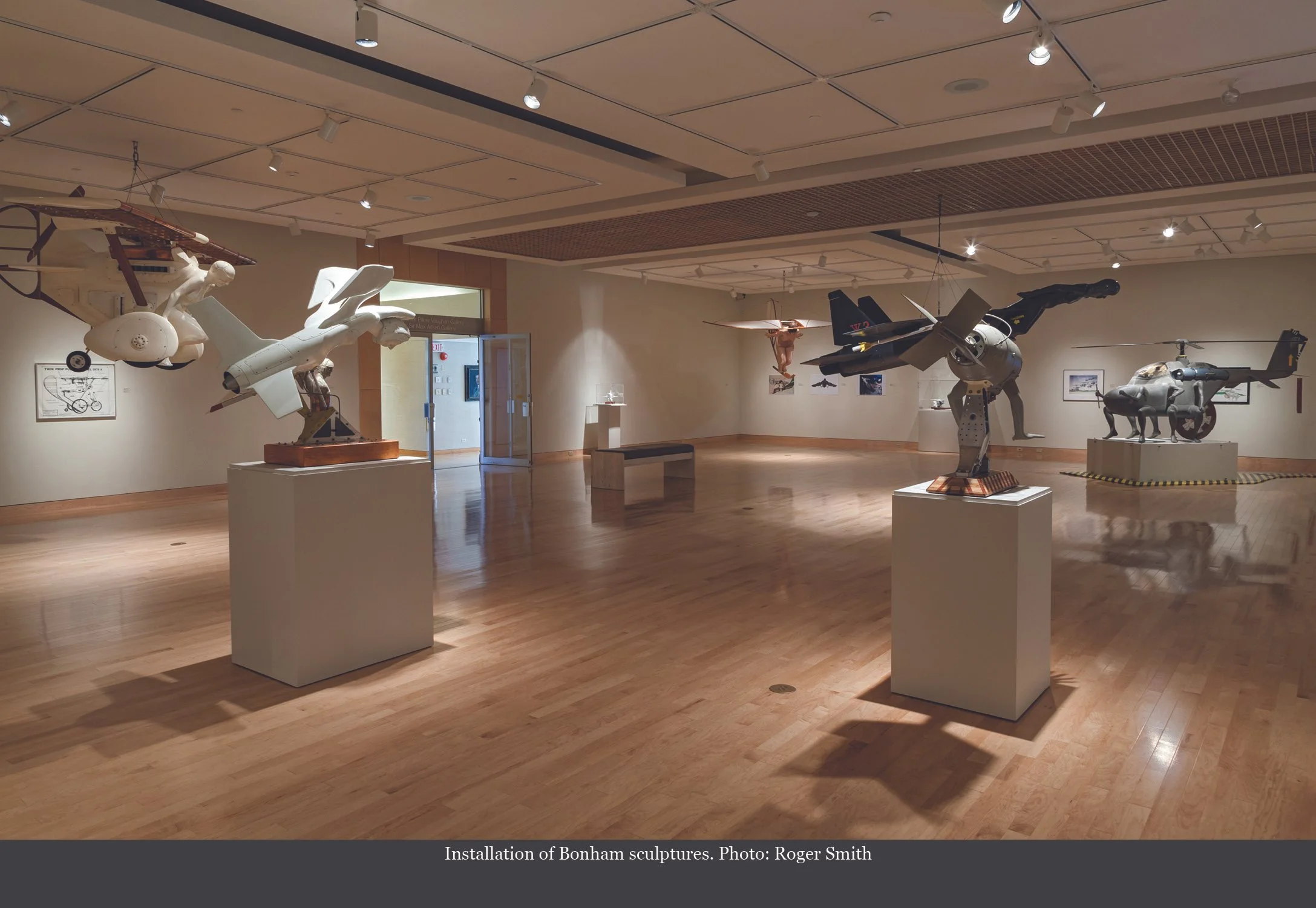
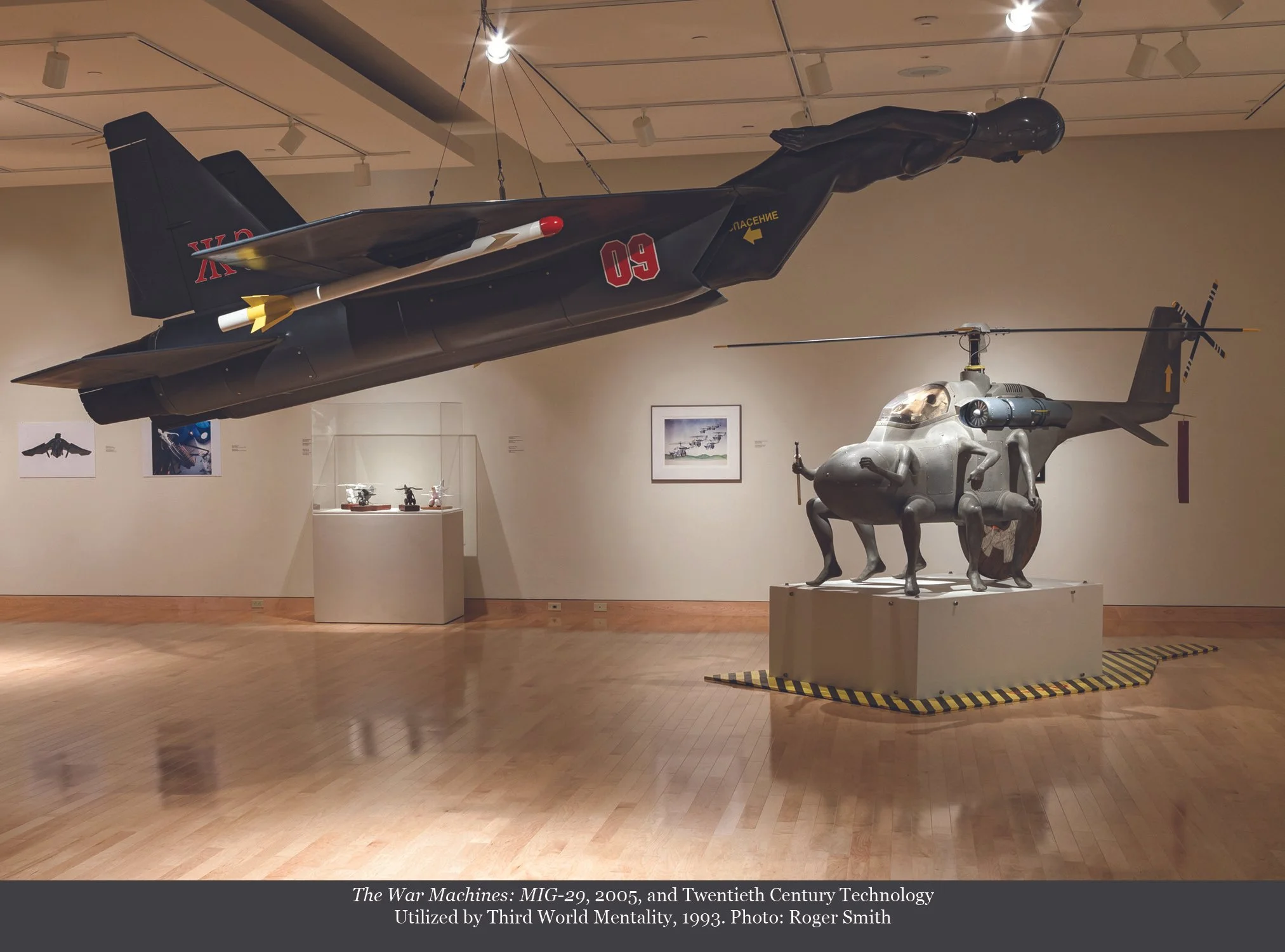
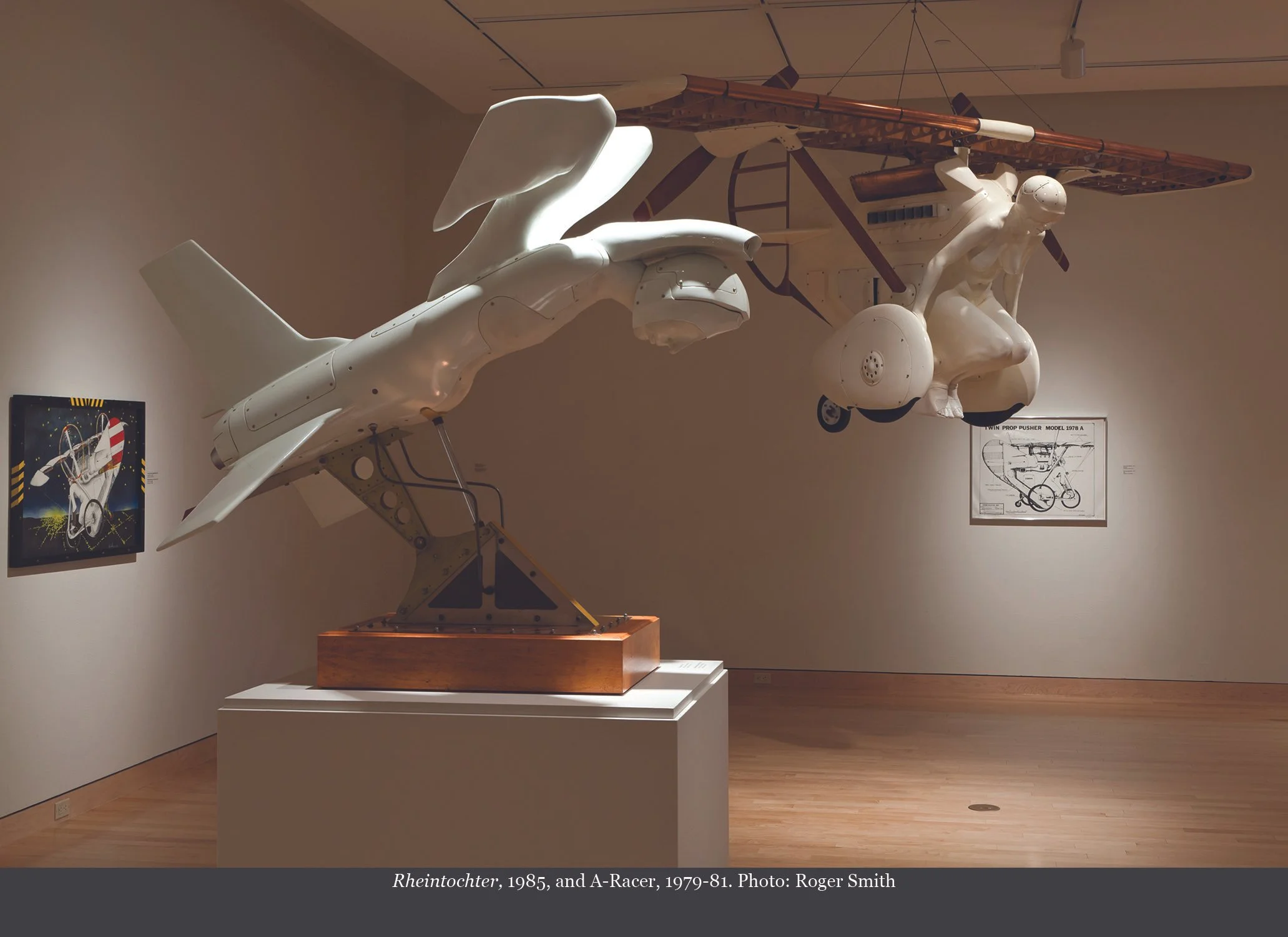
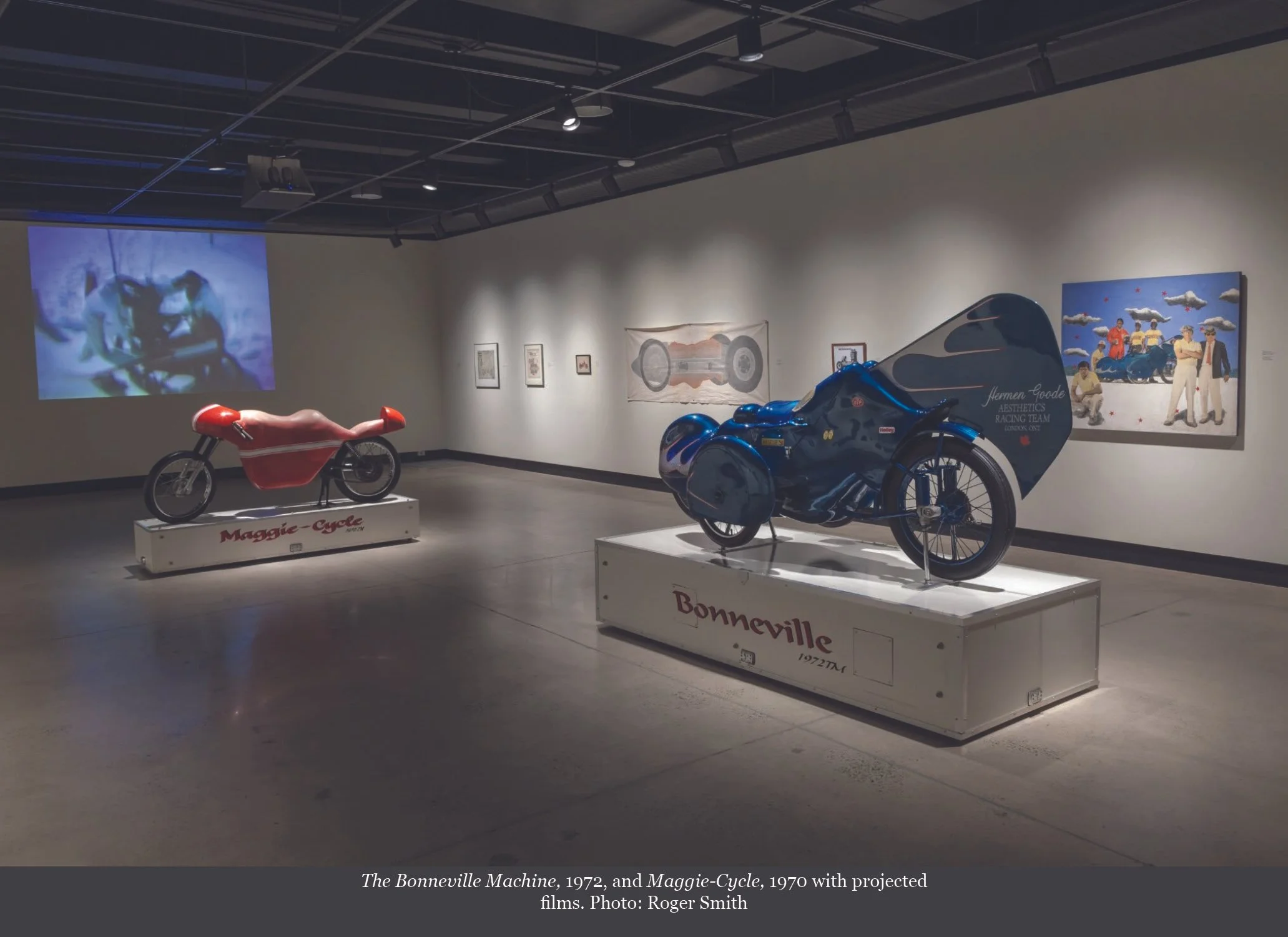
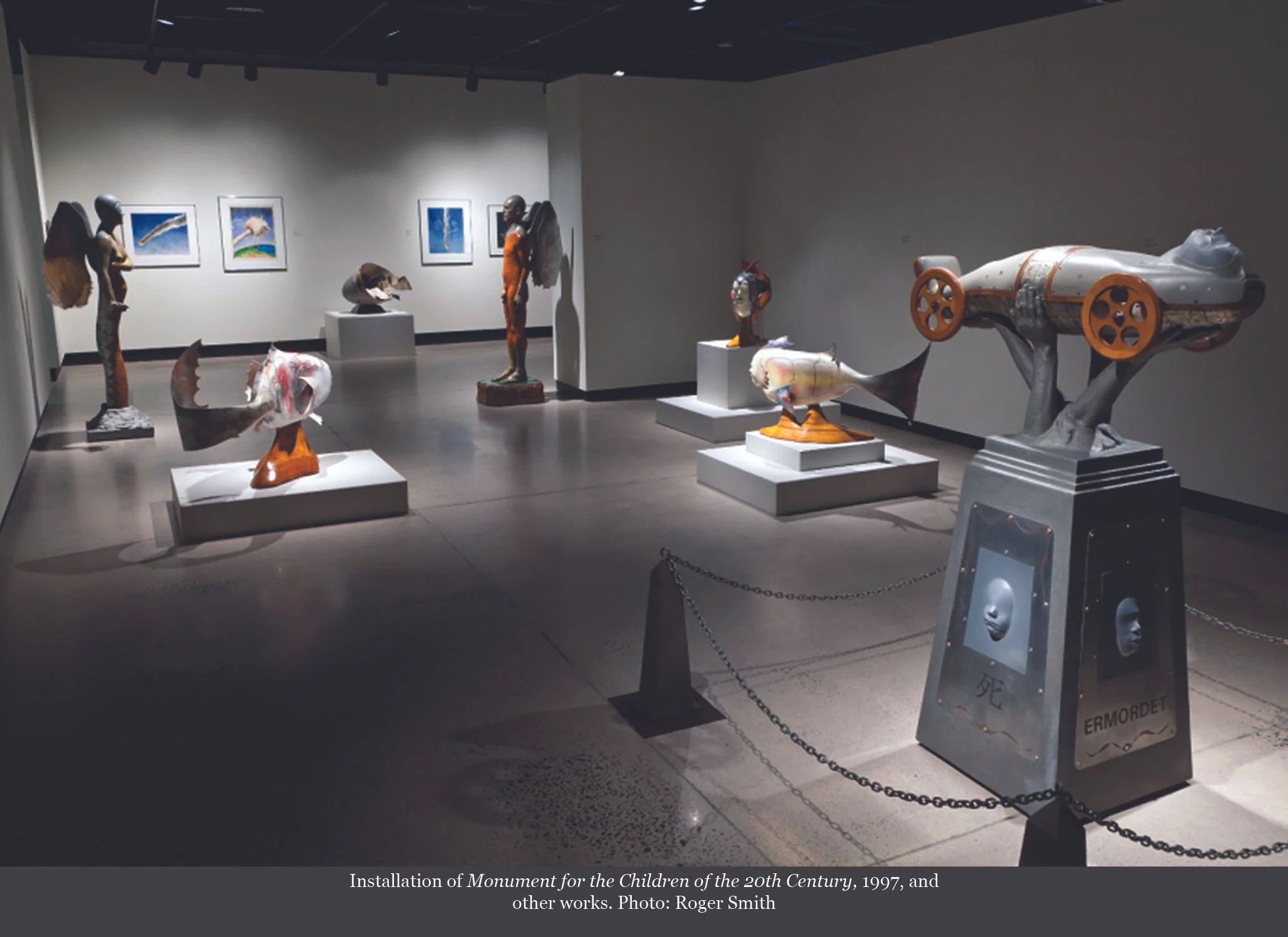
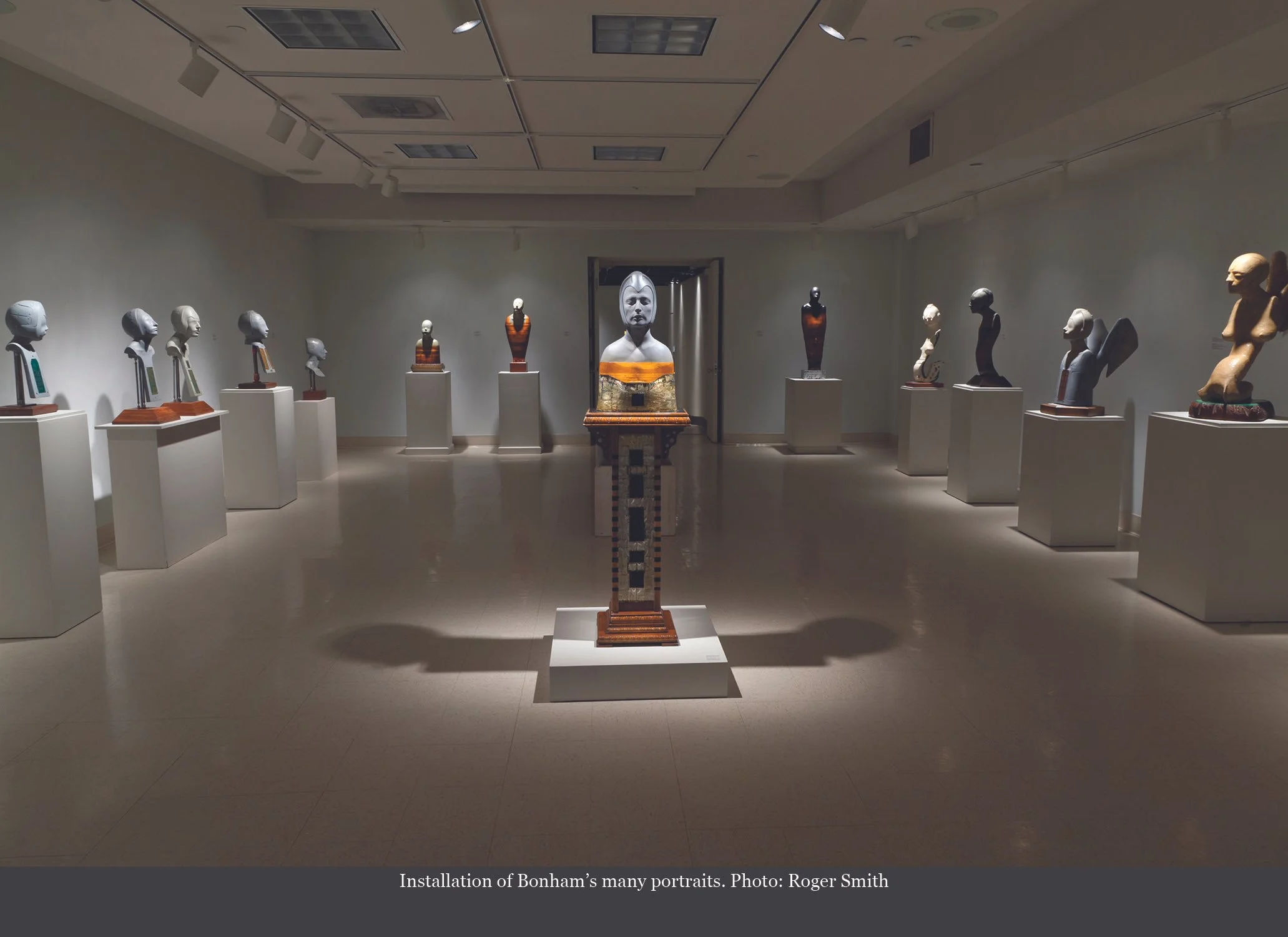
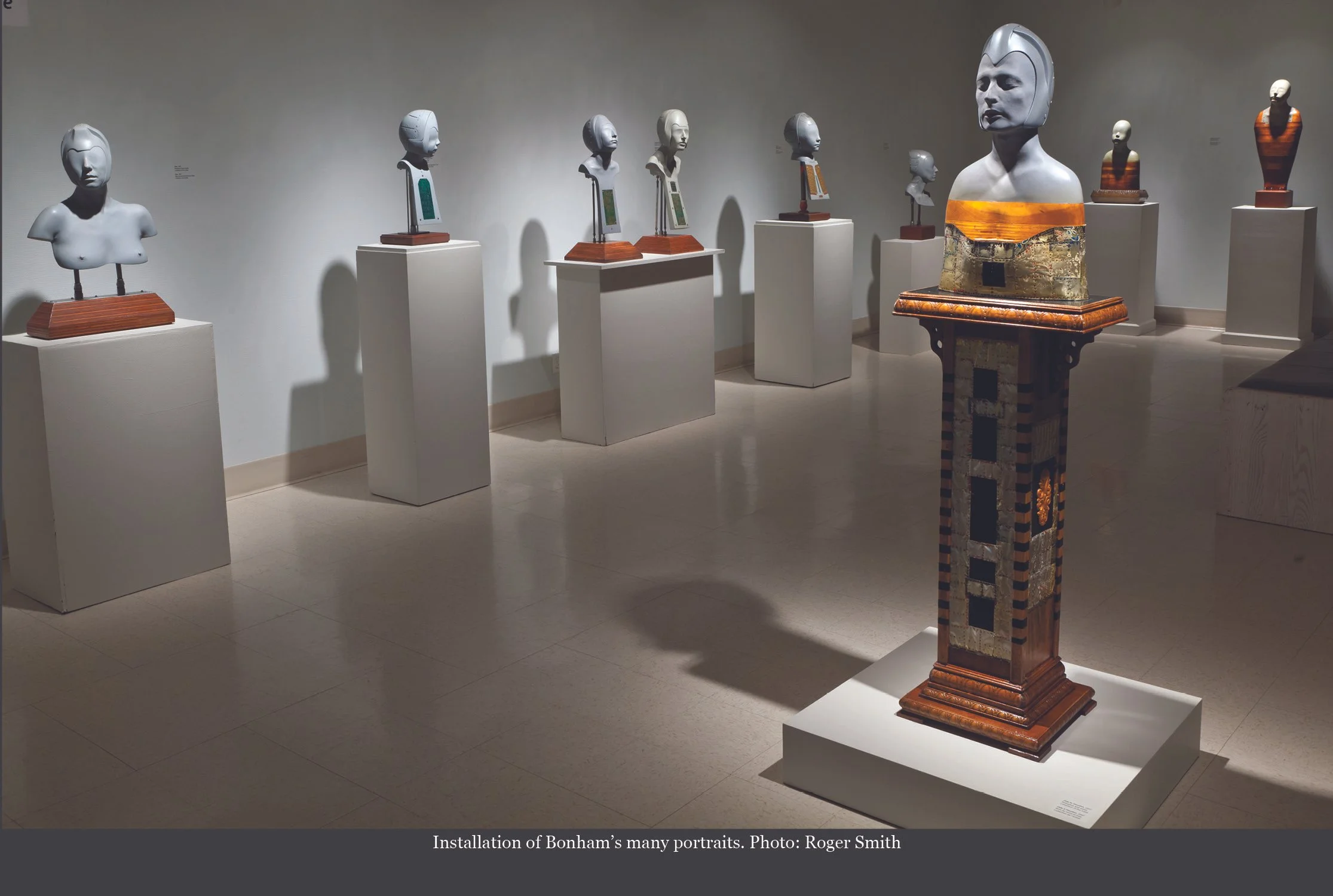
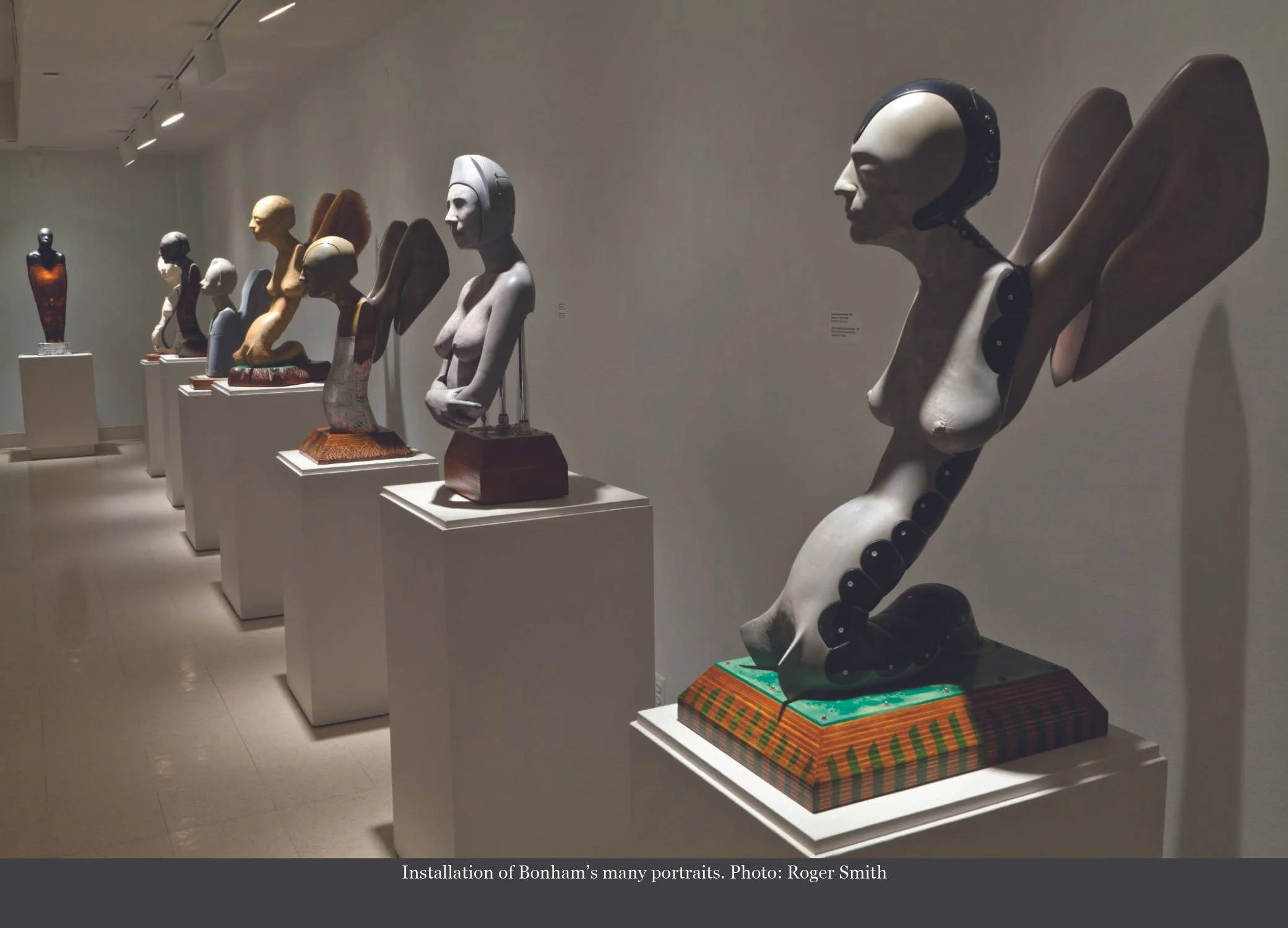
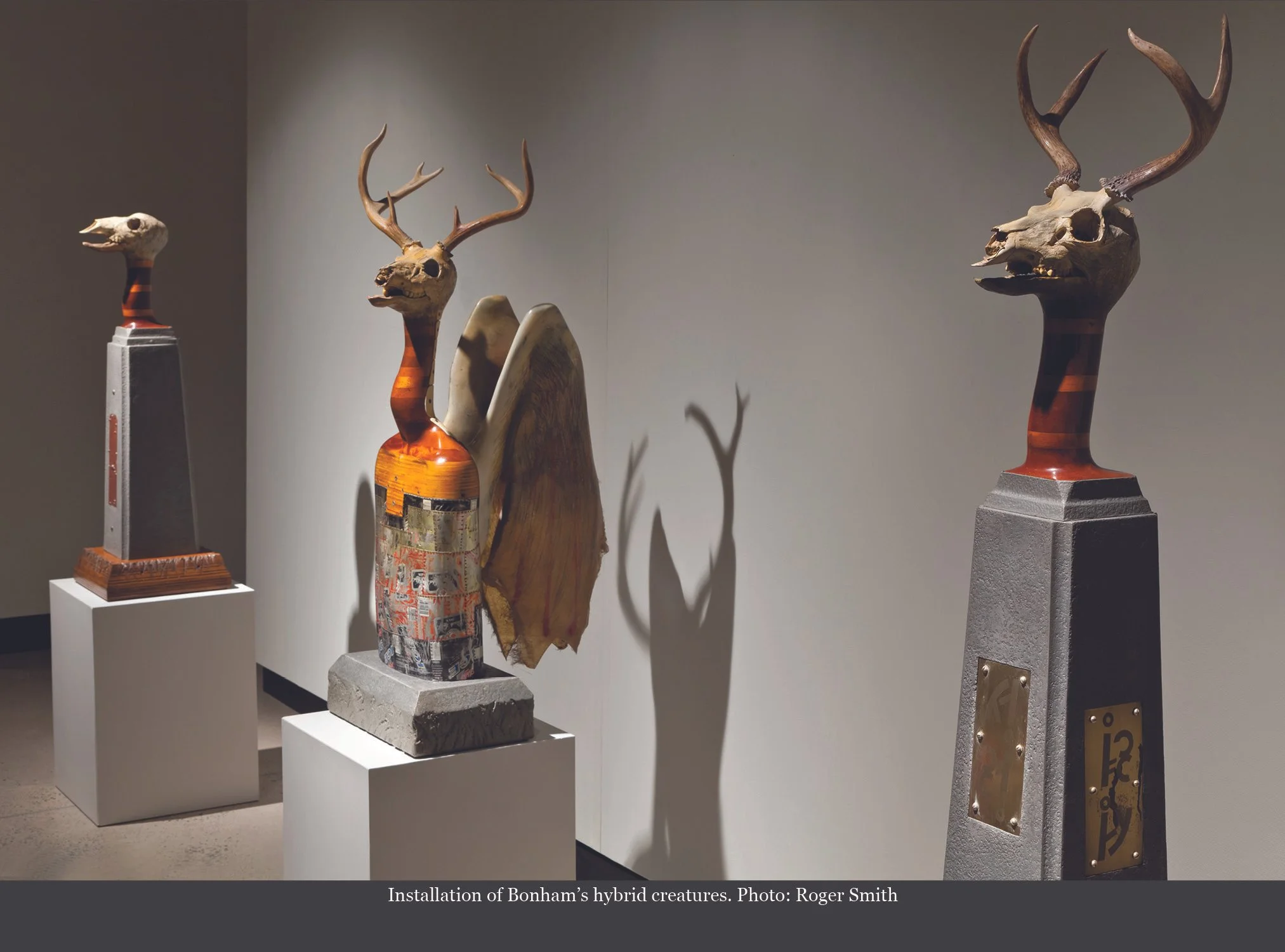
The monumental exhibition Don Bonham, RCA: Stranger in a Familiar Land, curated by Terry Graff, occupied two floors of the Beaverbrook Art Gallery and ran from June 28 to September 30, 2012. It chronicled Bonham’s distinctive creative vision through the presentation of his many anthropomorphic flying and ground machines, numerous sculpted portraits that merge classical form with modern technology, and various angelic bodies and chimeric creatures, such as winged serpents, human-koi fish, and other mythical human-animal hybrids. Along with sculpture, it also featured many drawings, collages, prints, photographs, films, and assorted ephemera – a dazzling array of objects and artifacts that shone a spotlight on more than forty-five years of highly creative art production.
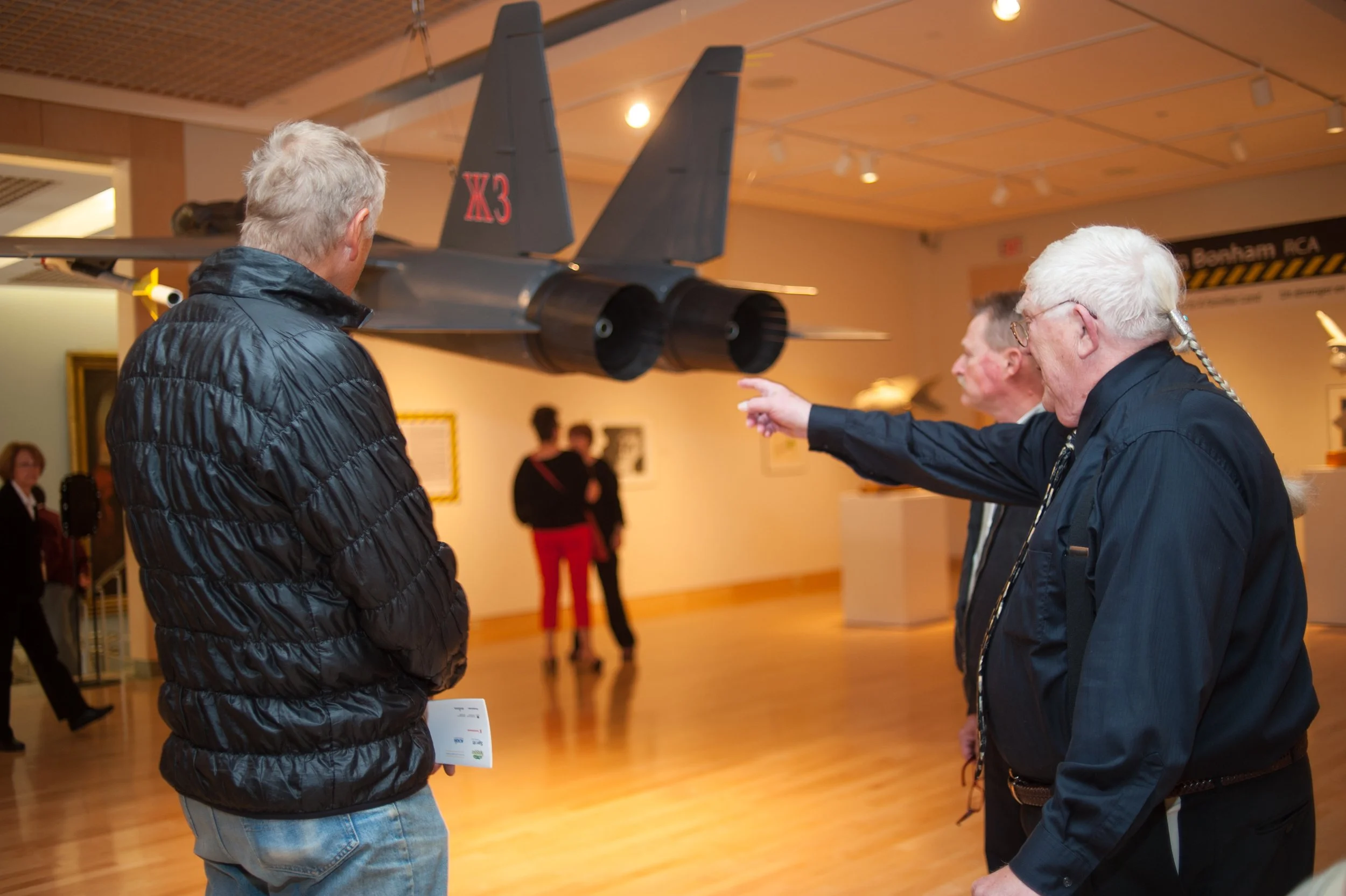
Bonham giving a tour of his retrospective exhibition. Photo: Rob Blanchard
The title of the exhibition alludes to Robert A. Heinlein’s 1961 science fiction novel Stranger in a Strange Land (ref. Exodus 2:22:), which is the story of a human being who was orphaned on Mars when his astronaut parents died, was raised by Martians, and then later returned to Earth. As an infant, Bonham was abandoned by his biological mother and raised by his great-aunt and -uncle. As Bonham recalled, “They didn’t tell me that I was adopted until I was about eleven or twelve, I think, but I already knew something wasn’t right. . . . They tried to make me part of their family, but I never quite fit in.”
The exhibition’s title also referred to Bonham’s experience as an American who moved to London, Ontario where a group of local artists associated with a Canadian art movement that was dubbed London Regionalism strongly expressed an anti-American ethos. Bonham was viewed as an outsider, a threatening presence to Canadian sovereignty, out to conquer Canada — not just militarily, but culturally, politically, and economically.
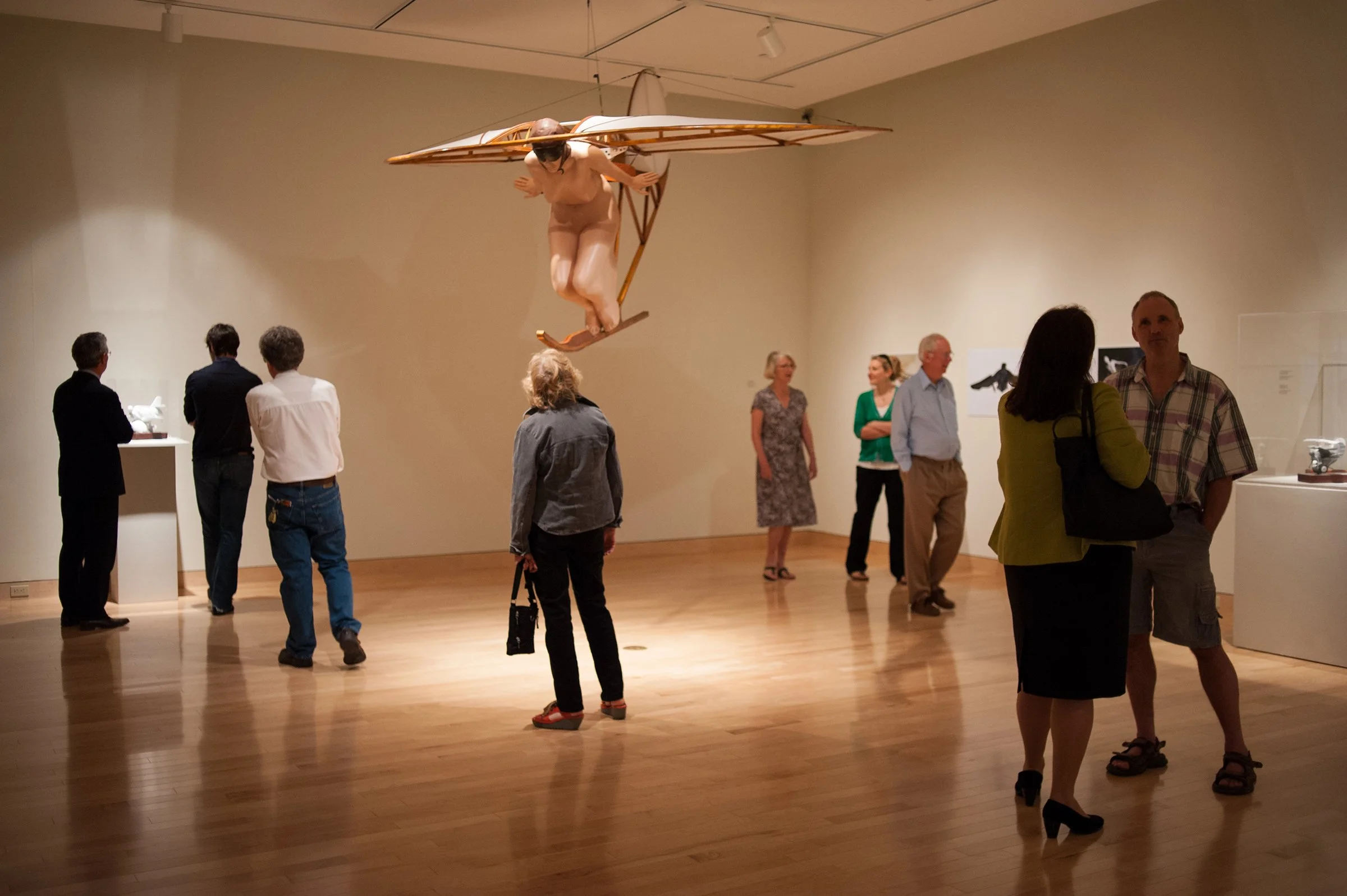
Gallery visitors viewing First Flying Machine, 1975. Photo: Rob Blanchard
In addition, Bonham found that Canada was not particularly receptive to the genre of figurative sculpture at the time, and the overt sexual context of his work added to his being somewhat dismissed and misunderstood in a negative way.
A further interpretation of the exhibition’s title has to do with the experience of “reverse culture shock" or "re-entry shock," like when soldiers return home and struggle to adapt because their home has changed too much over time, and because they themselves have been changed by their experiences. For Bonham, as a former Marine NCO, this reference is also an integral part of his story.
Finally, the title also alludes to the emergence of the cyborg, a sentient body that has been radically altered to survive in a rapidly transforming, technologically mediated world. It is a surreal form perhaps best referred to as “uncanny,” a psychological experience that could be described as a strange and anxious feeling created by familiar objects in unfamiliar contexts, or the instance when something is familiar yet alien at the same time.
Don Bonham, RCA: Stranger in a Familiar Land was funded by the Canada Council for the Arts and the sponsorship of PotashCorp.

Bonham giving a tour of his exhibition to a representative of Atlantic Potash Corporation, sponsor of the exhibition. Photo: Rob Blanchard
According To Bonham
So, I went to New York where the artists informed me that it was the centre of the art world, then I found myself in Toronto which I was told was surely the centre of the art world. Soon thereafter I traveled to Montreal which I was assured was the centre of the art world. And now I find myself in London, Ontario, which I am told is most definitely the centre of the art world. So, I have come to the astute conclusion that the centre of the art world is 32" below my ass at any given time.
Making art is not just the ability to put pleasing aesthetic shapes or forms together. It’s more than that; it’s your total involvement with life.
To become a successful artist, you must turn into yourself and use what you know, to say and feel. I was something of a greaseball and loved cars and machines and technical things, so I started thinking and making art in those terms. That’s when I became relevant as a visual artist.
Ninety percent of art is boring as hell. It’s the other ten percent that makes it all worthwhile. To be good, you’ve got to take a chance, you have to really get into it. I’d rather risk everything and take my chances on failing so that when I do something good, well, it really feels great.
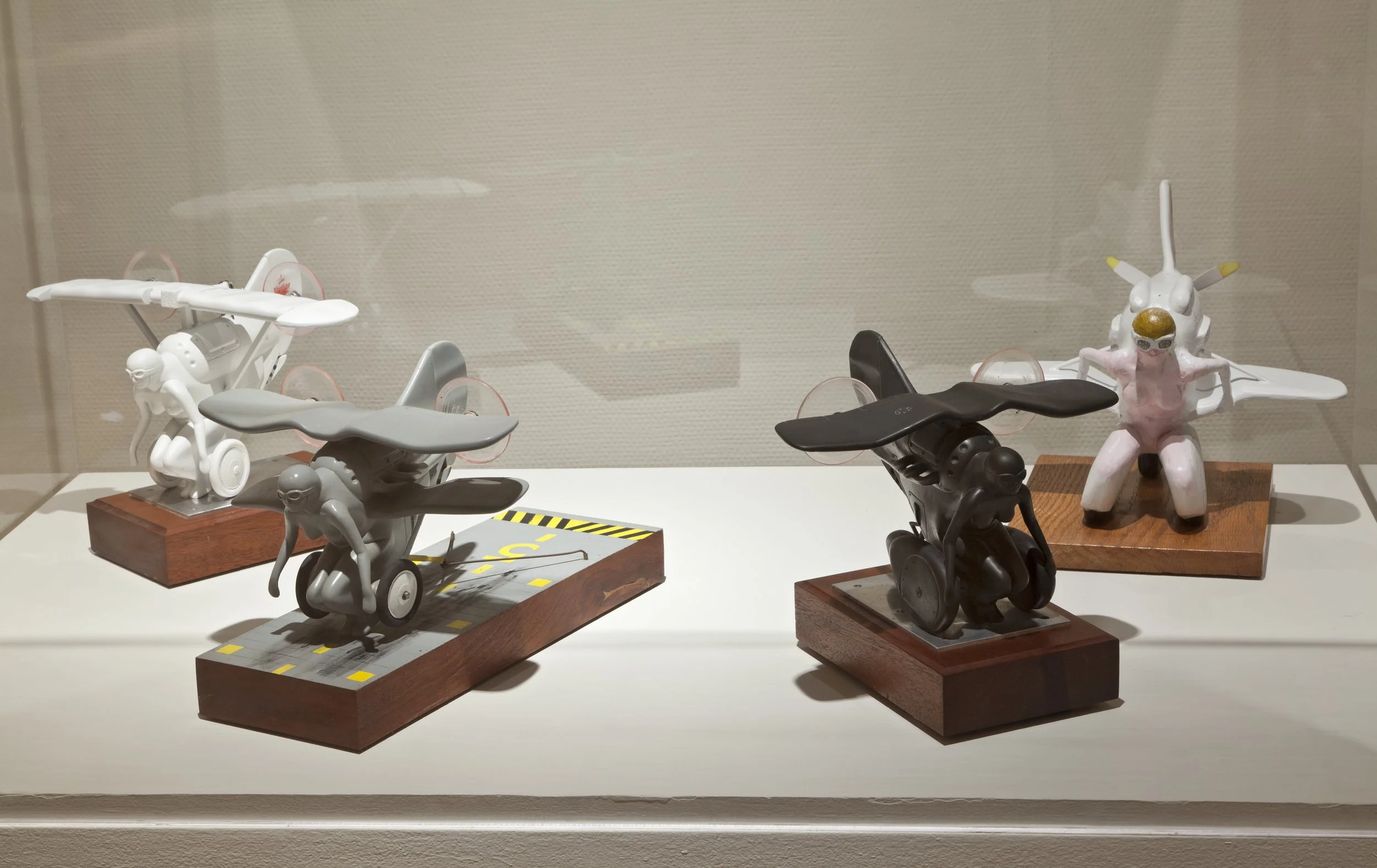
Flying Machine Maquettes. Photo: Roger Smith
The desire by humans to make a statement is pretty unbelievable. It’s our basic desire, even if we may not be aware of it. If we look back in time, the first human rubbed his hand in some pigment and slammed it against a cave wall, and that was his signature. Today you have idiots tagging themselves by writing their name on anything and everything, or holding their cameras out in front of themselves to photograph themselves. But some of us try to hone our visual skills a little better than that and to become artists. I, for one, have spent forty-five years trying to hone my skills. I had a great desire to make art . . . and, by God, I worked at it.
As an artist, I am merely reflecting what I see and feel and think about the world. I see it, I reflect on it, and I interpret it in the form of sculpture. My work is of my time, my century, and my culture. What’s really exciting is when viewers of my work recognise what they’re looking at, when they connect with my work. Some people have told me that they can’t look at an airplane now without seeing or thinking about my flying machines.
My machines deal with fantasy and in order to create the fantasy I must take my machines into the street. When I put my sculpture in the Detroit River or on the Salt Flats in Utah, the fantasy becomes complete. That’s when it picks up power. When you see the Bonneville machine glistening on the Salt Flats, the fantasy takes on real force. By placing my sculpture in these settings, I introduced factors that cannot be duplicated in an “art environment” like a museum or gallery. Sometimes my machines become so real that they almost scare me.
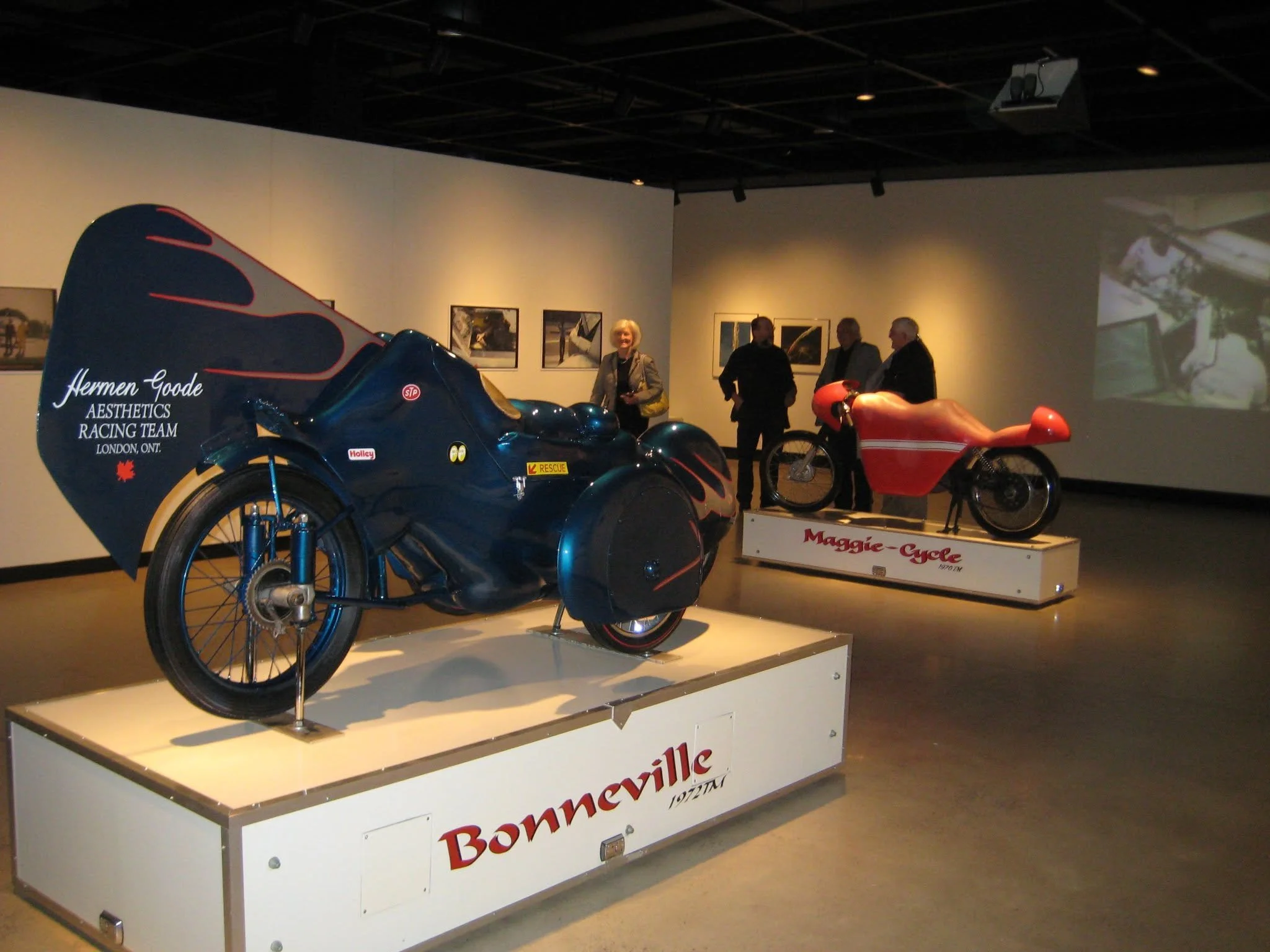
The Bonneville Machine, 1972, and Maggie-Cycle, 1970 with projected films. Photo: Roger Smith