The War Machines
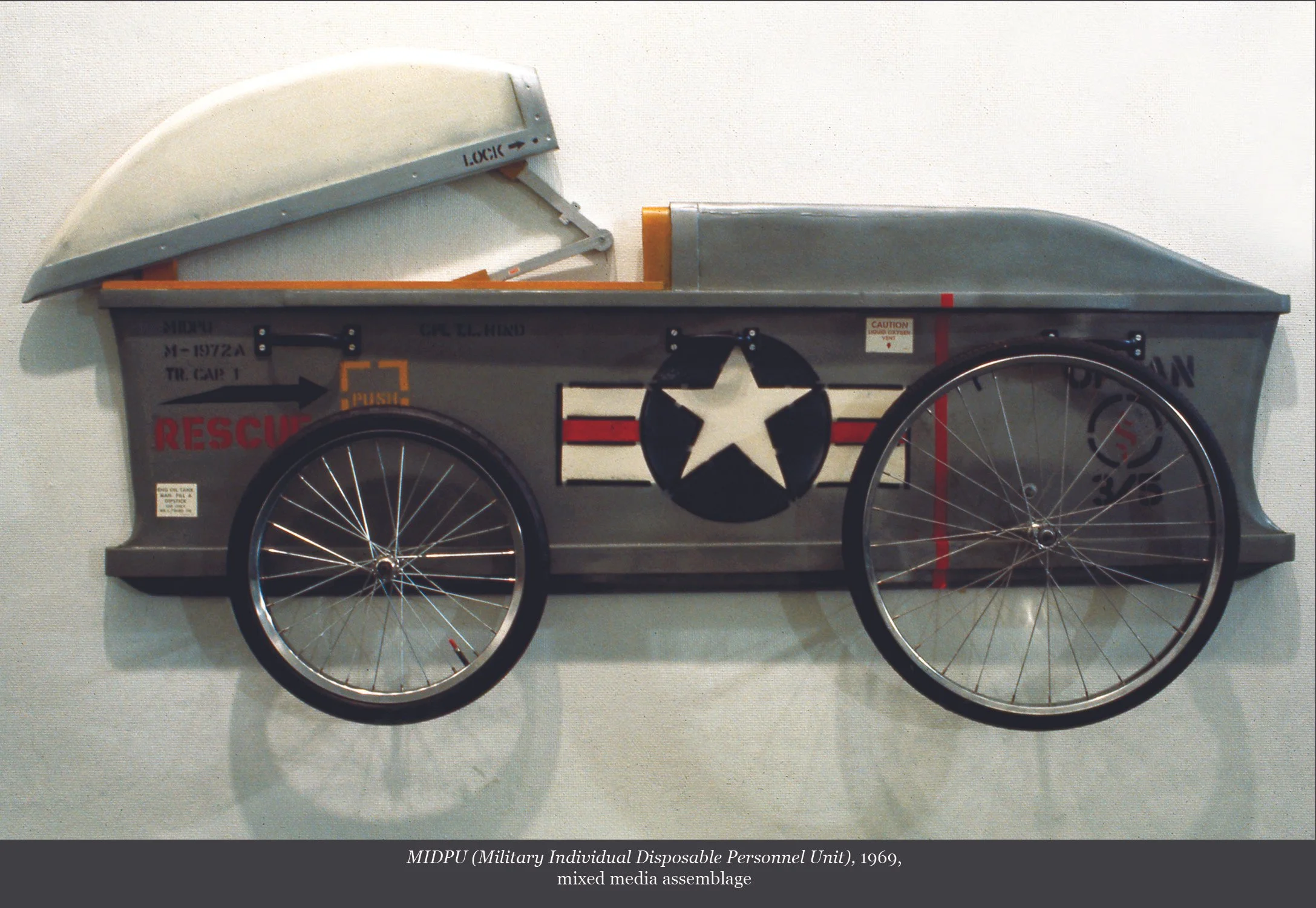
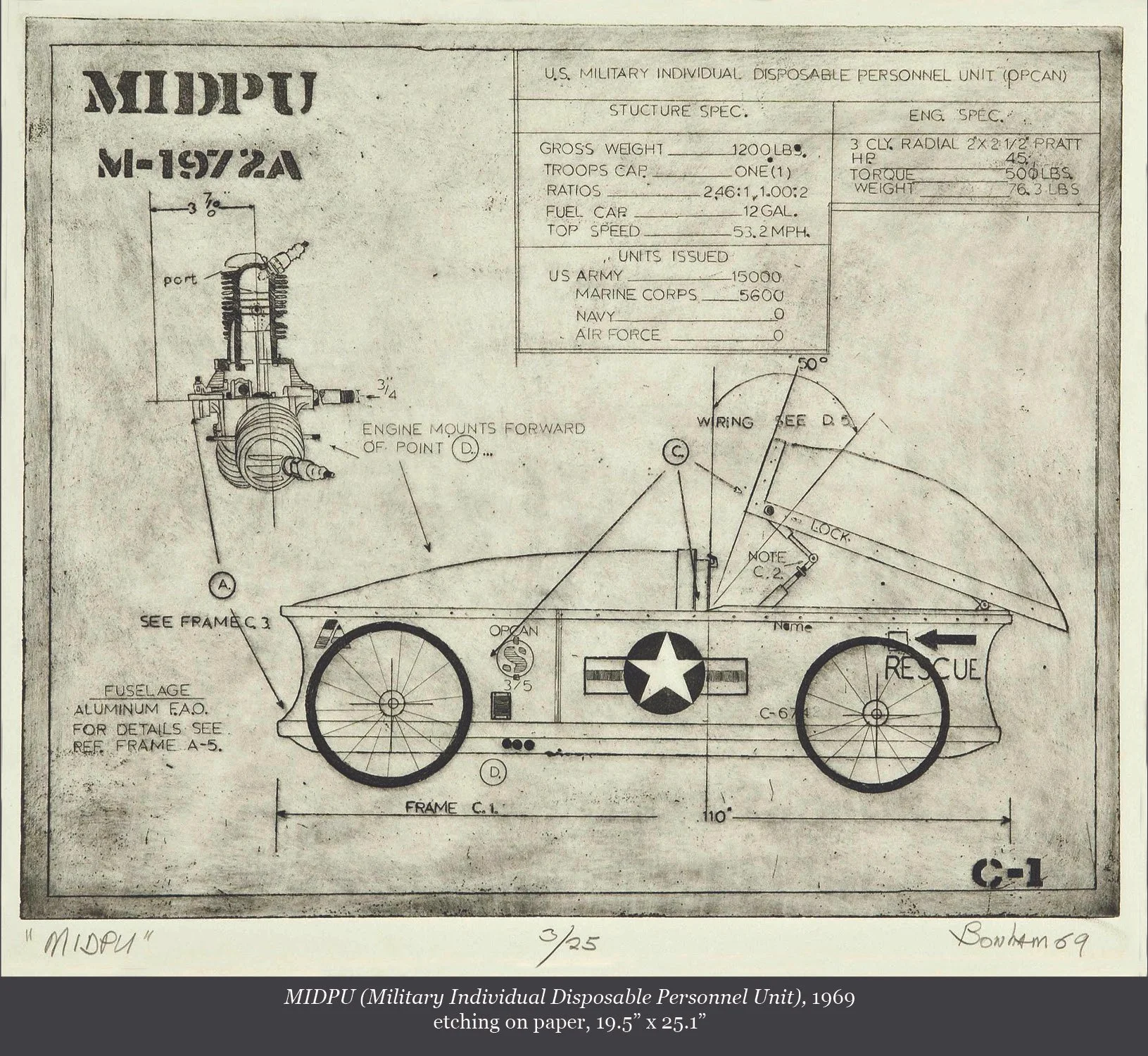
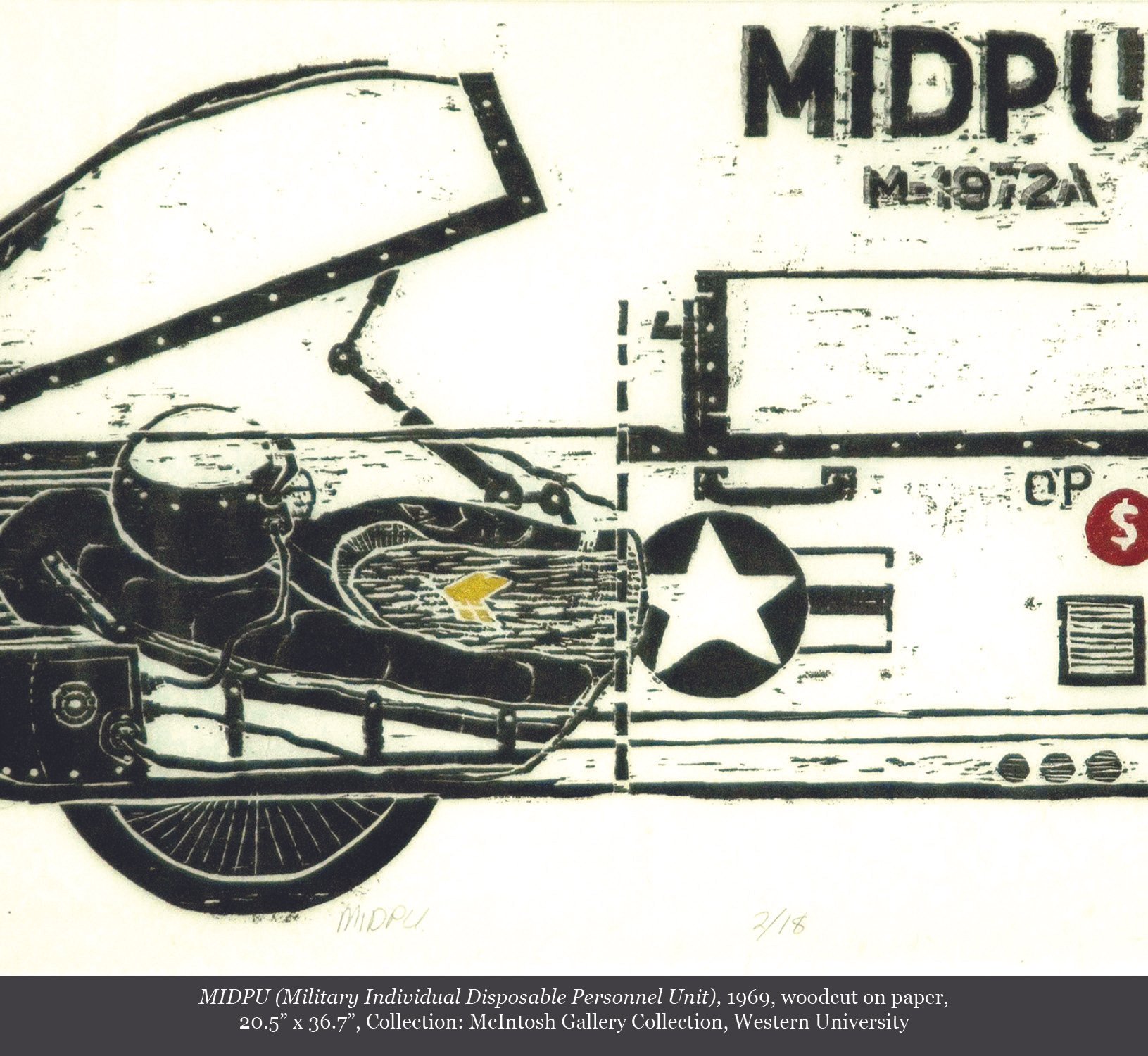
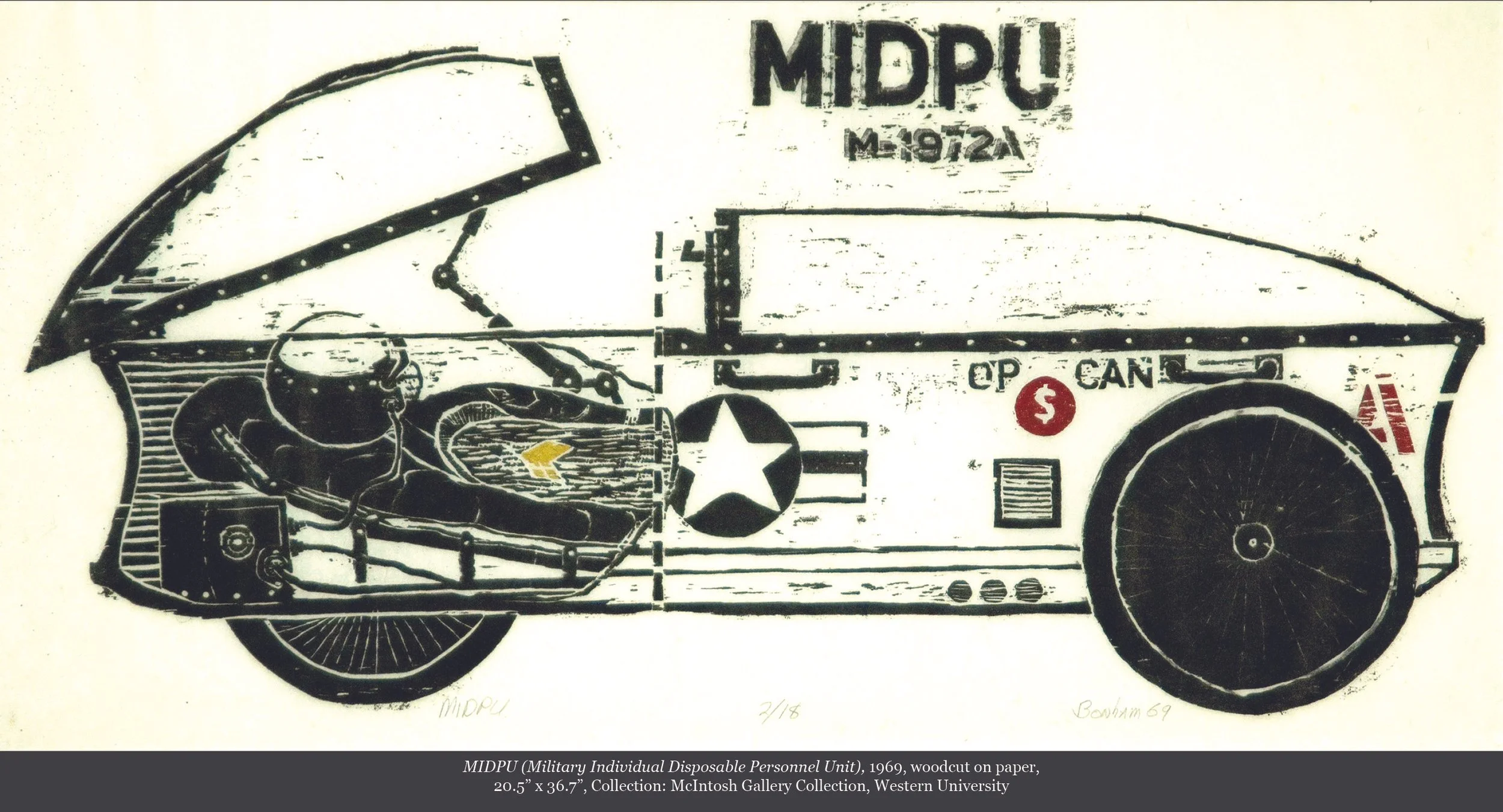
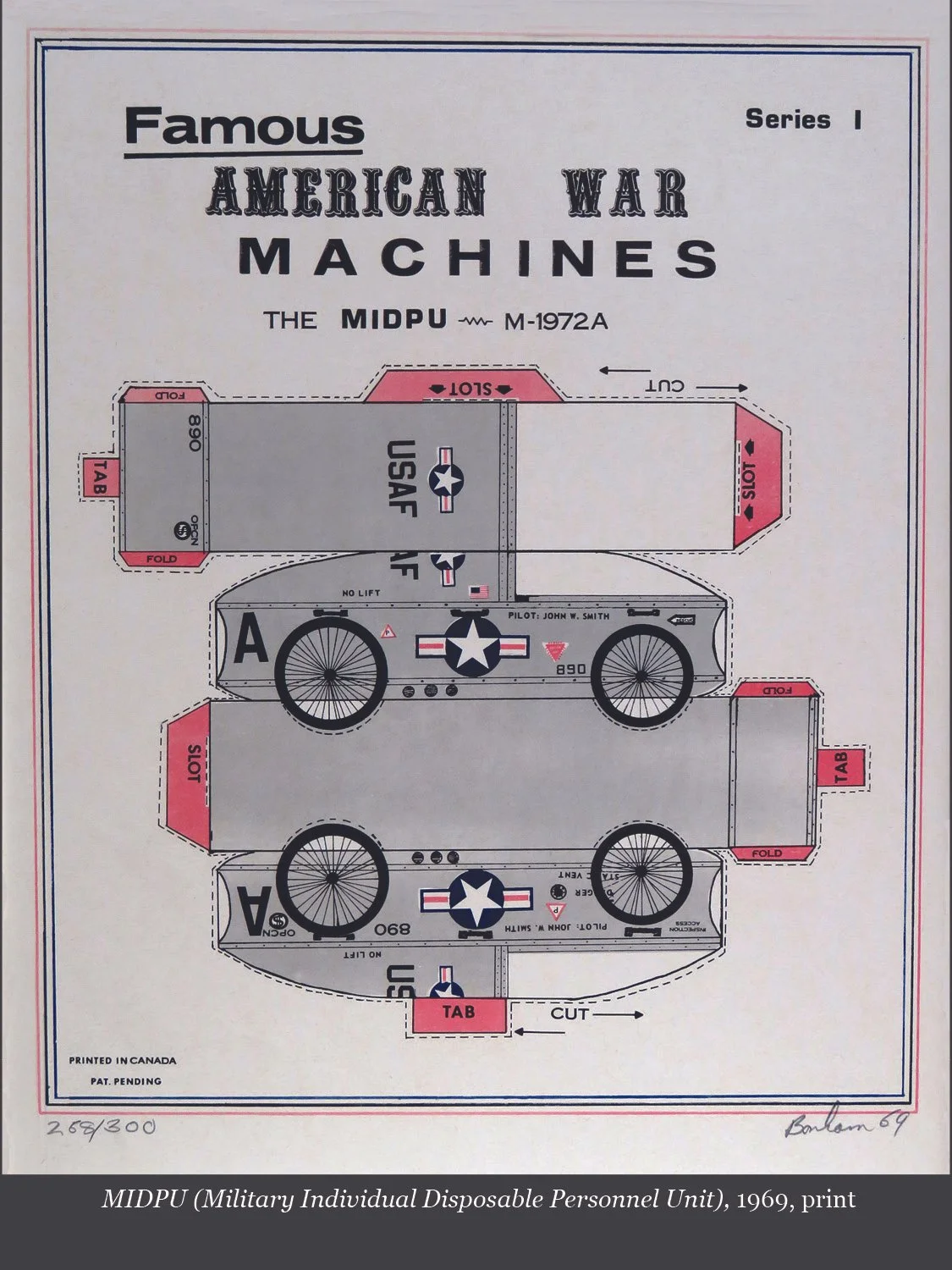
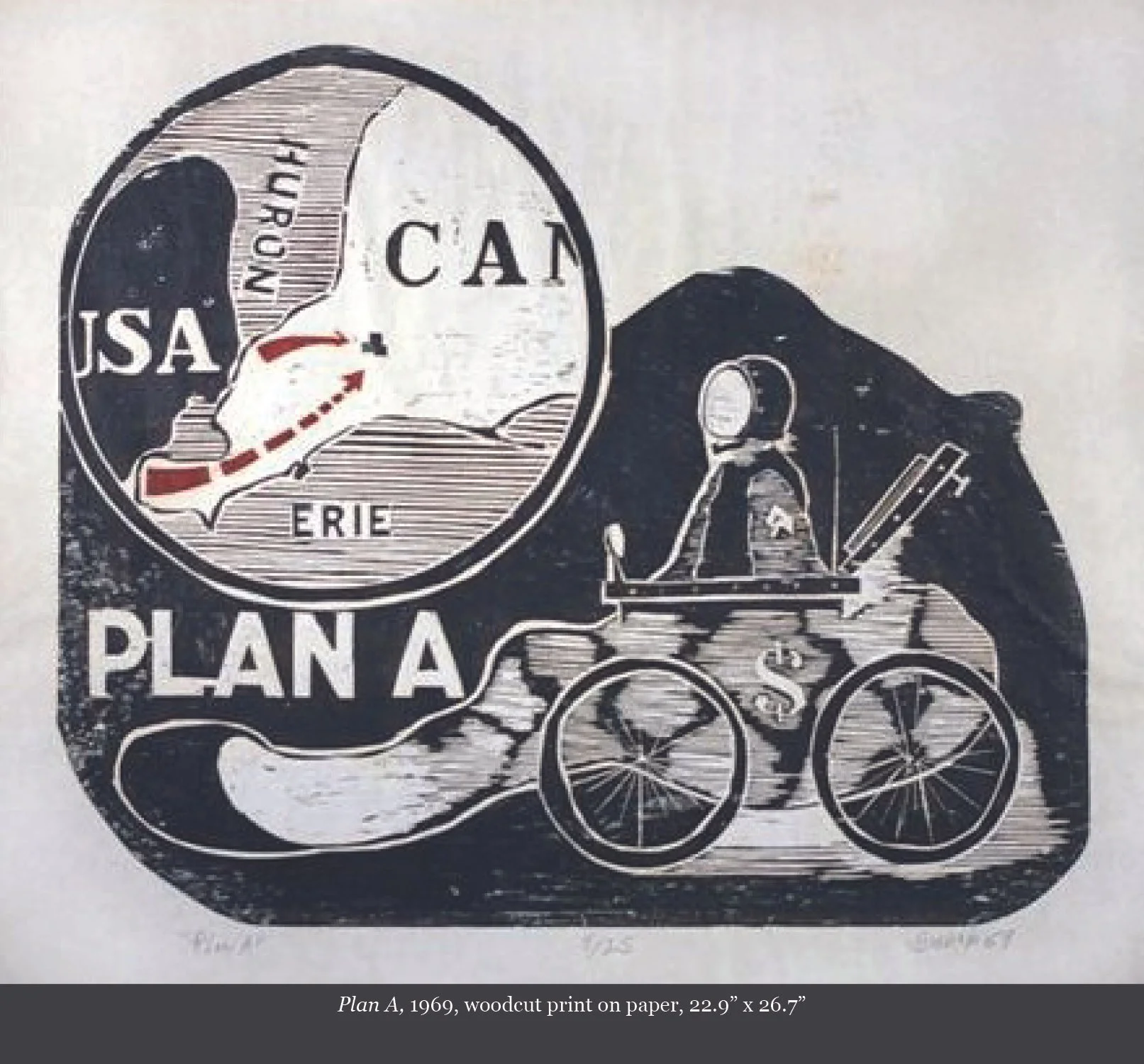
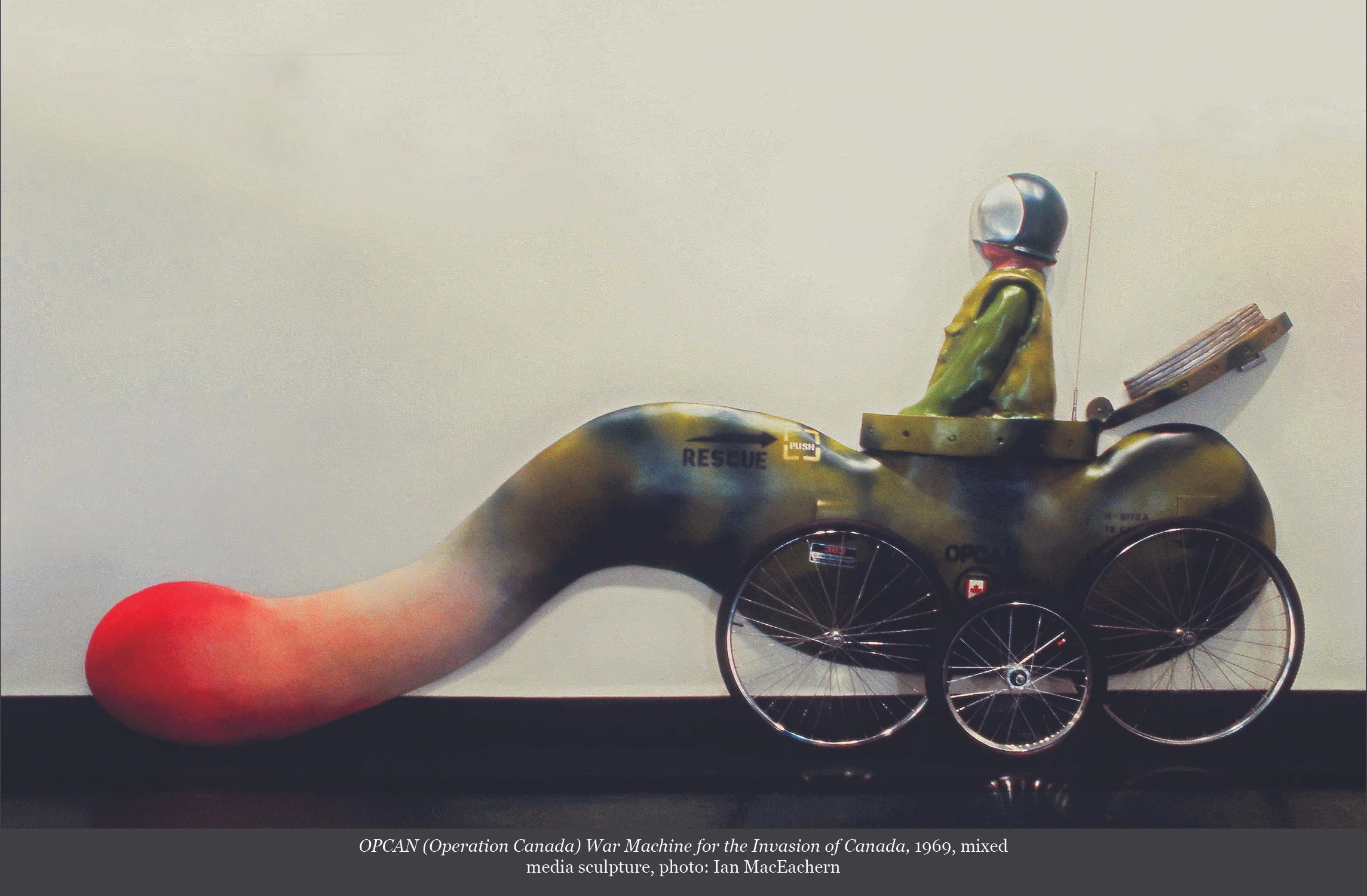
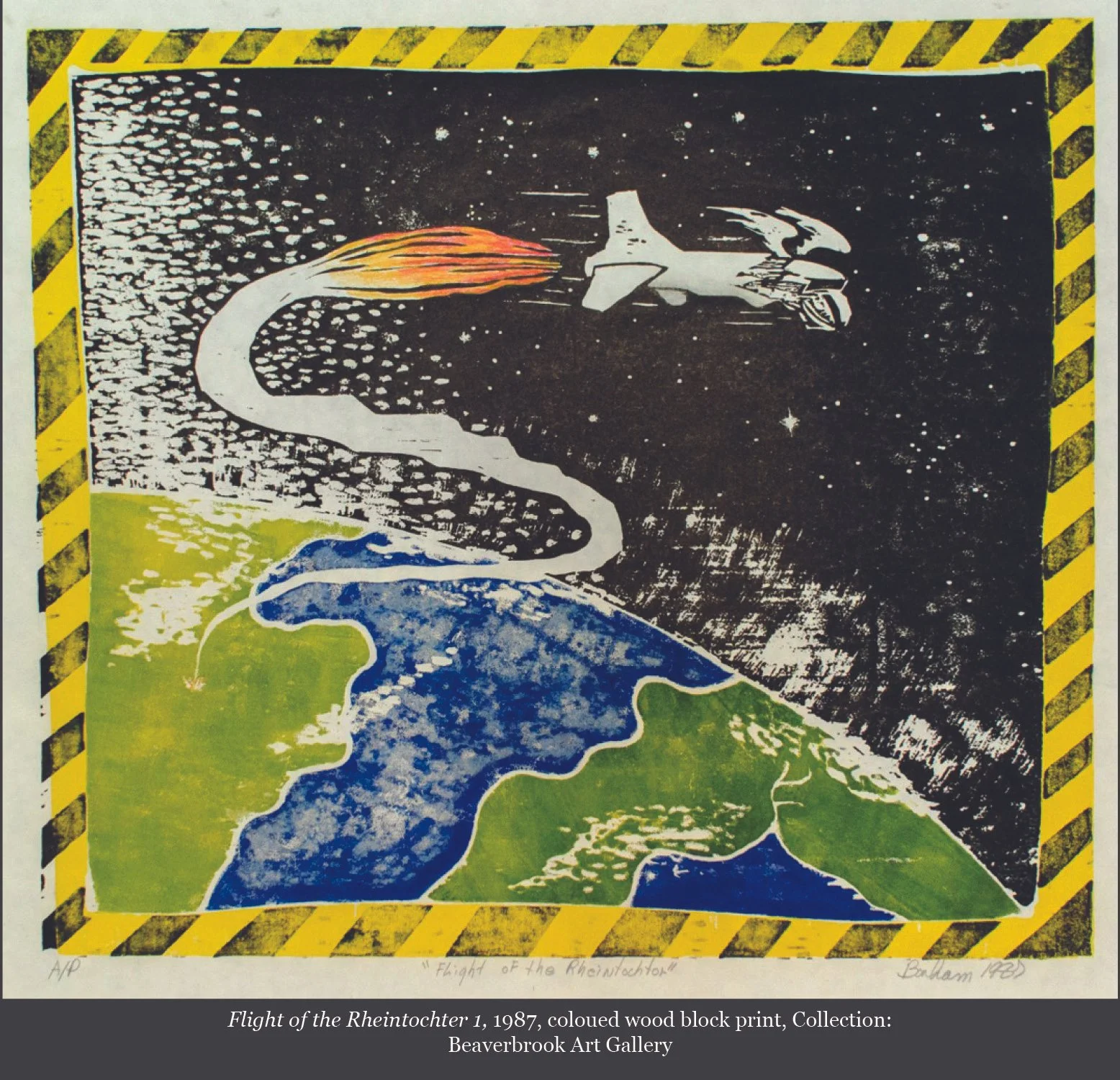
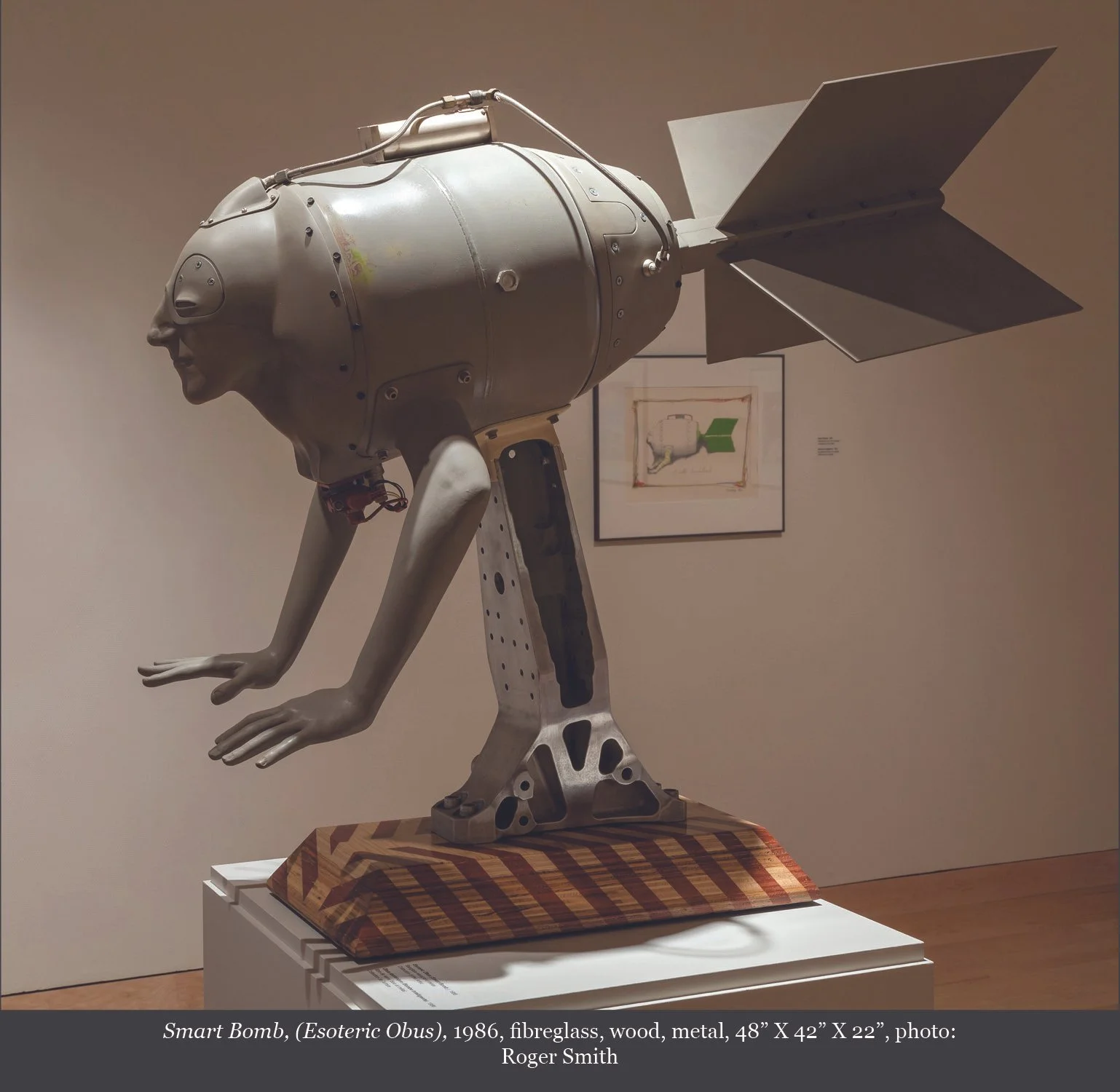
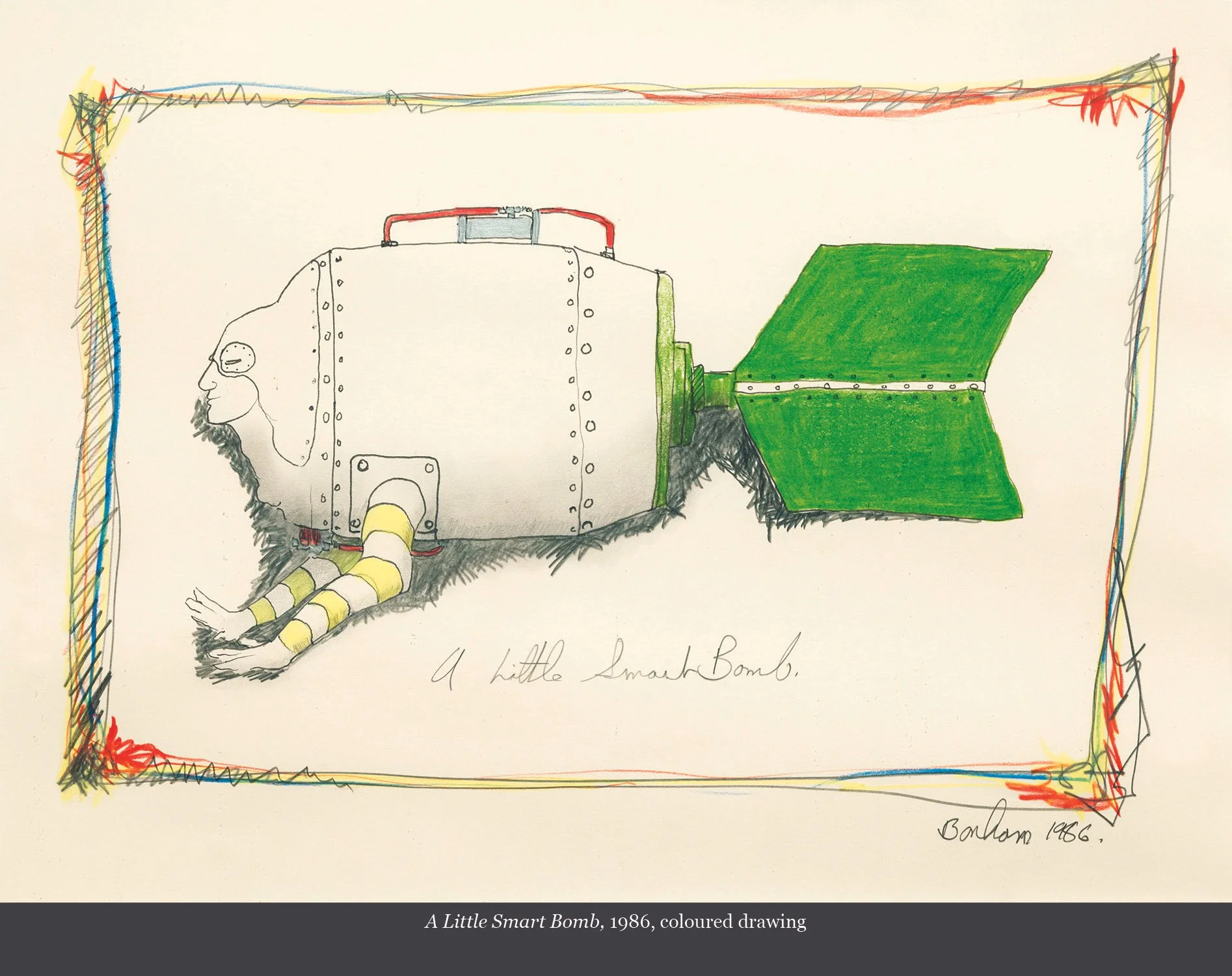
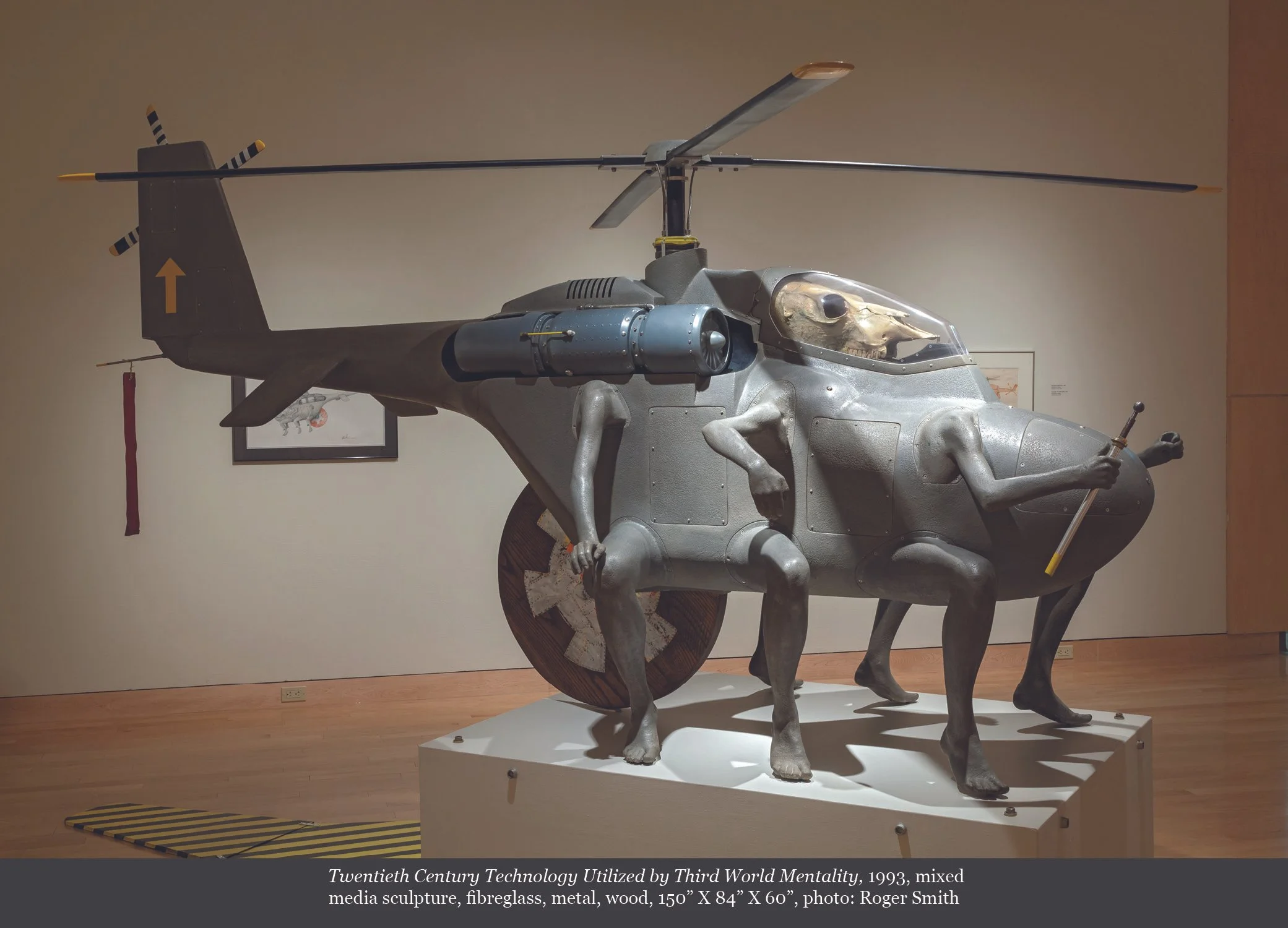
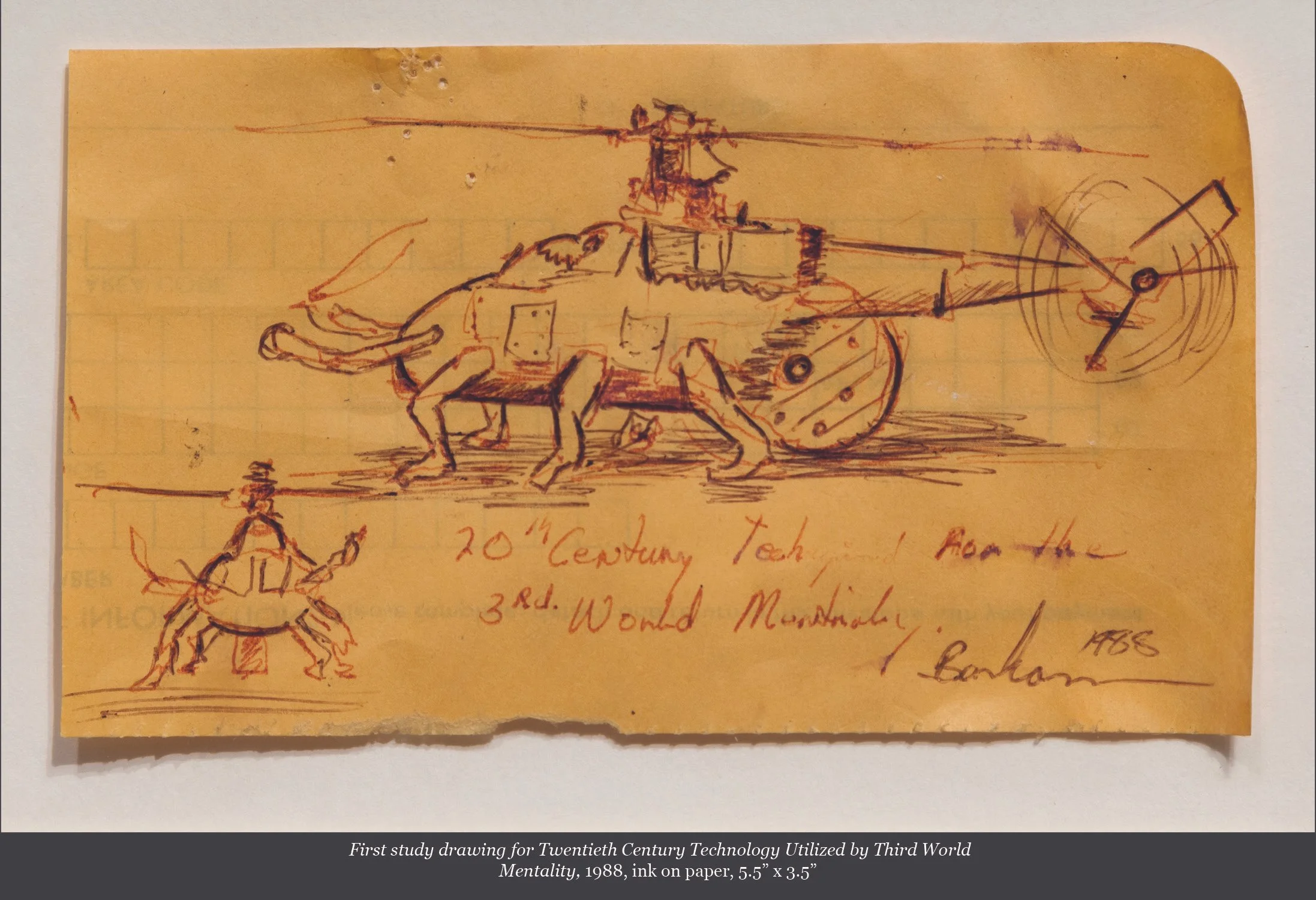
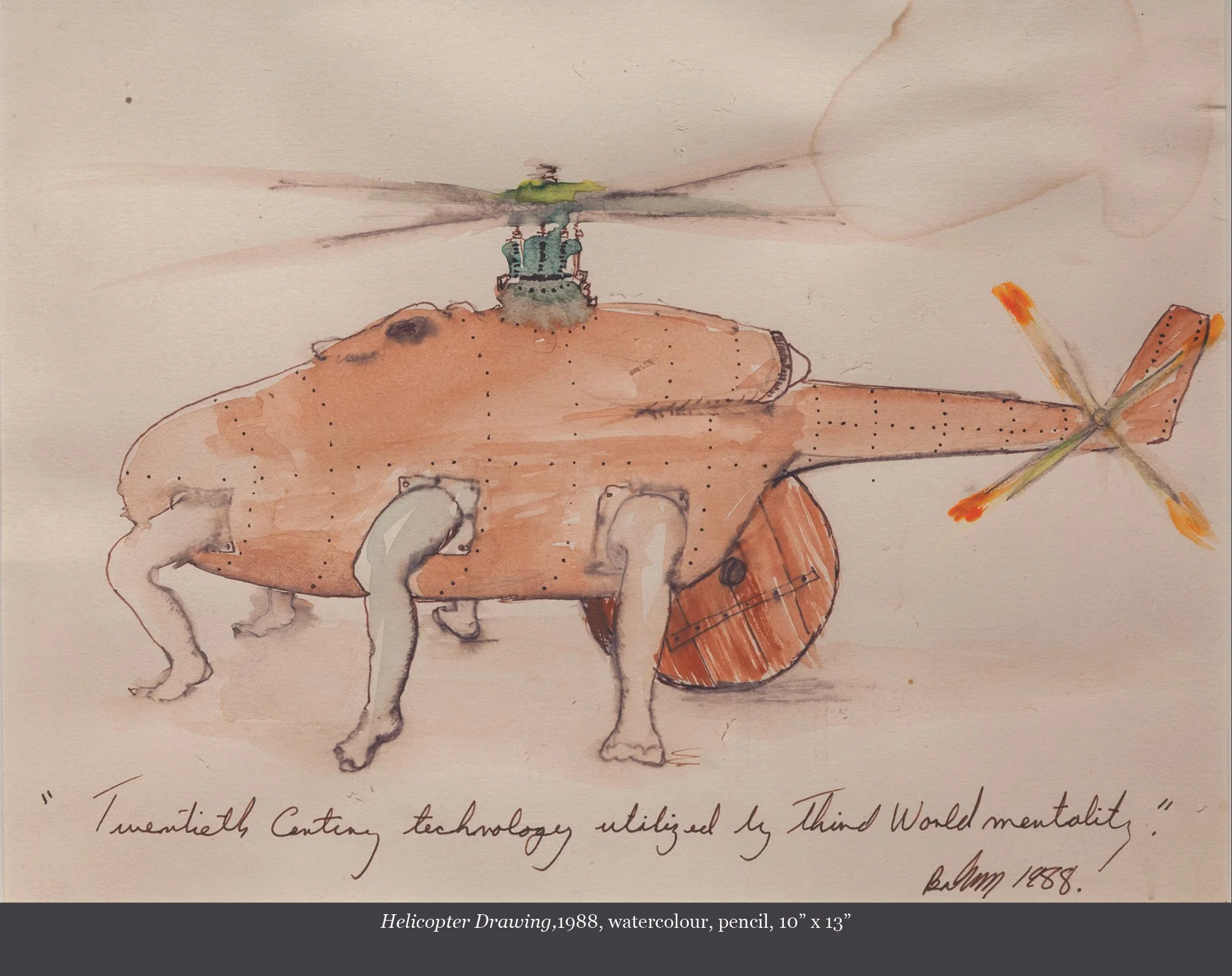
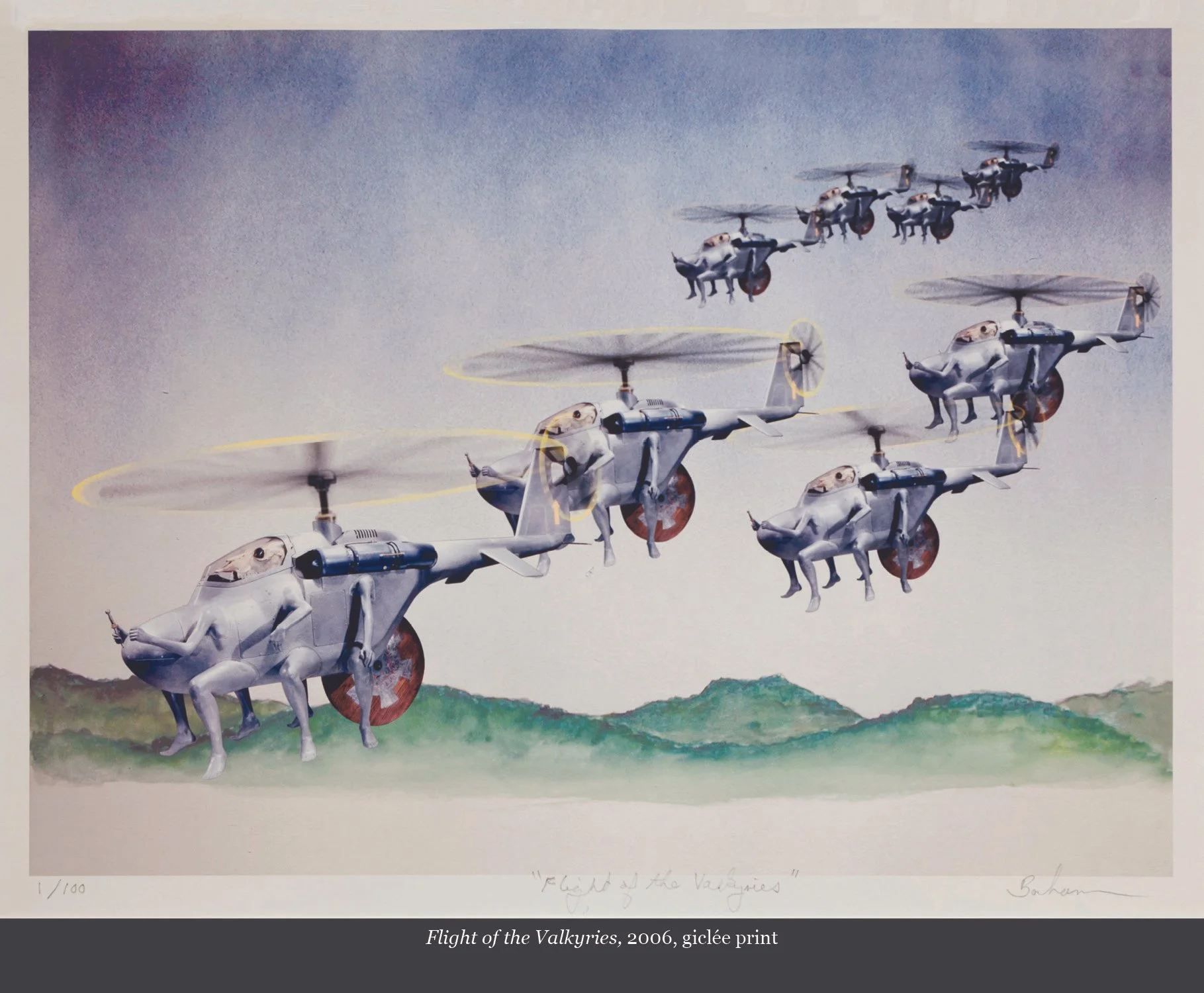
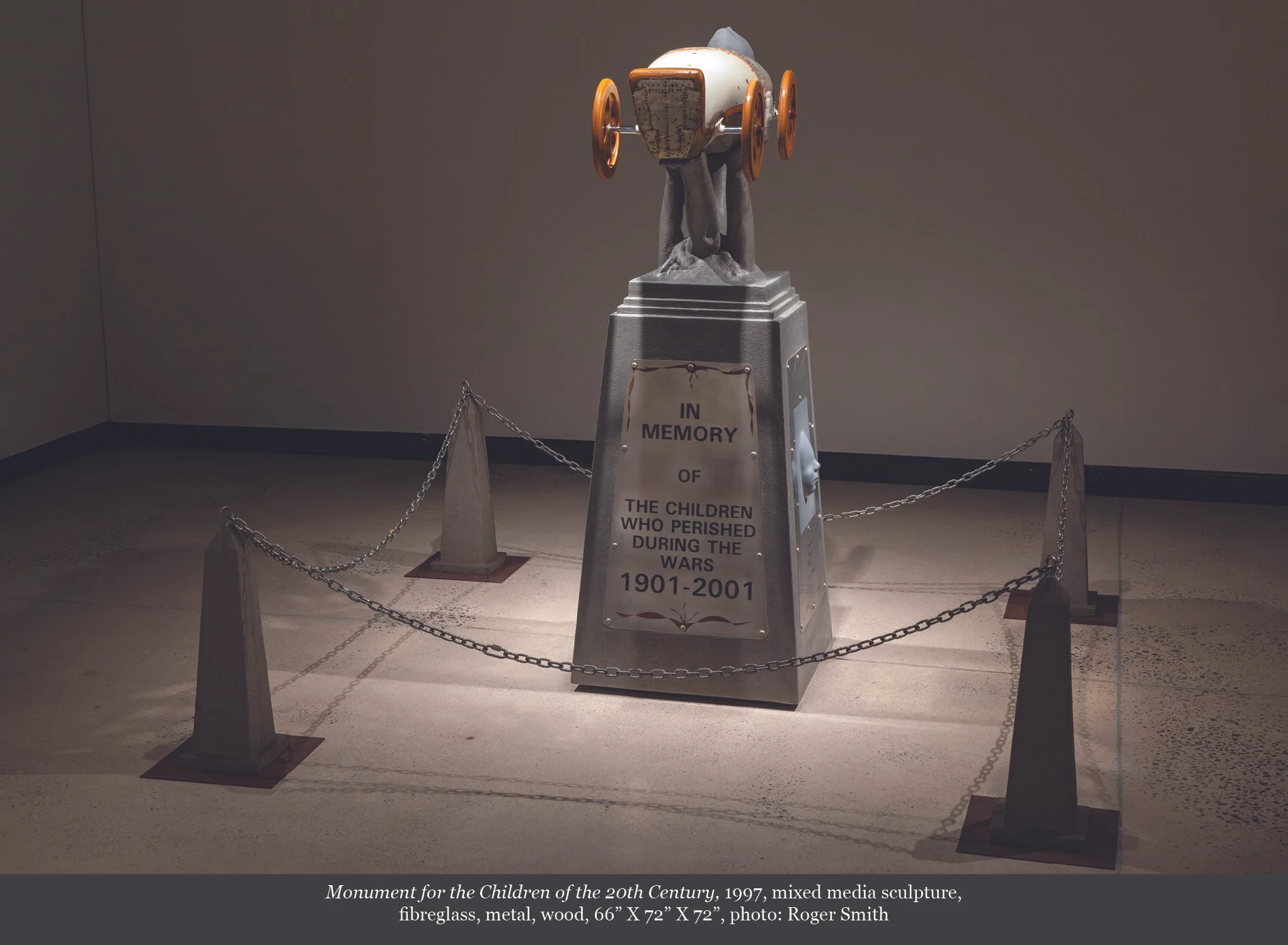
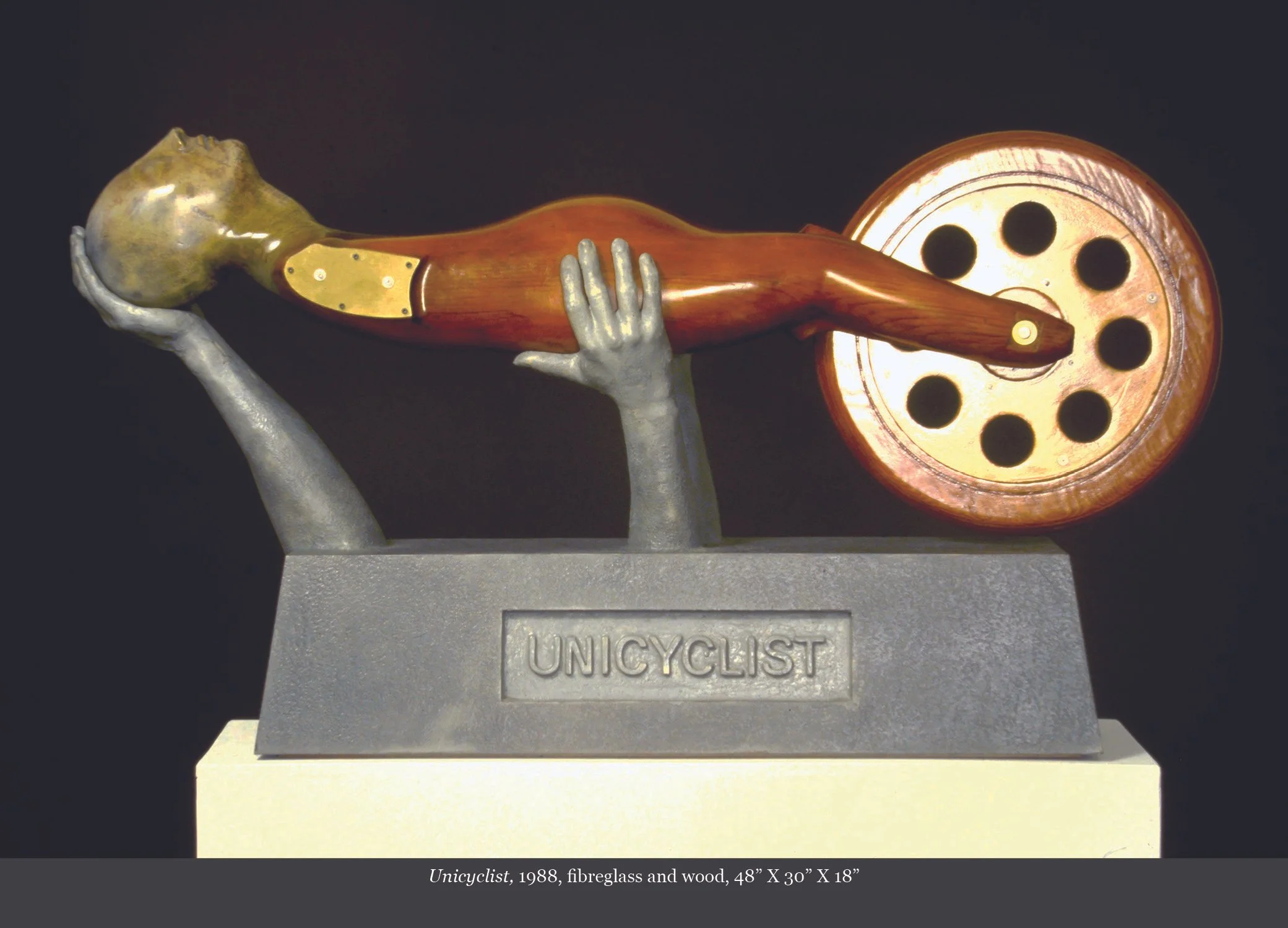
The first anti-war piece I made was in 1969. I was living in Canada, teaching printmaking for the fine arts department at the University of Western Ontario and sculpture at H. B. Beal Secondary School in London. While watching CBC Television, I saw these aluminum coffins being offloaded in Delaware, so I started doing drawings of aluminum coffins with wheels. As everything in the military comes down to initials, I called them M.I.D.P.U., which stands for Military Individual Disposable Personnel Unit
I made a whole series of American War Machines that included the SARMU, or Self-Administrating Religious Mobile Unit for worship under fire, a sexy morale builder called the American Flocking Machine, and the OPCAN Tank or Operation Canada Tank with an eight-foot penis and snow tires for the Canadian winters.
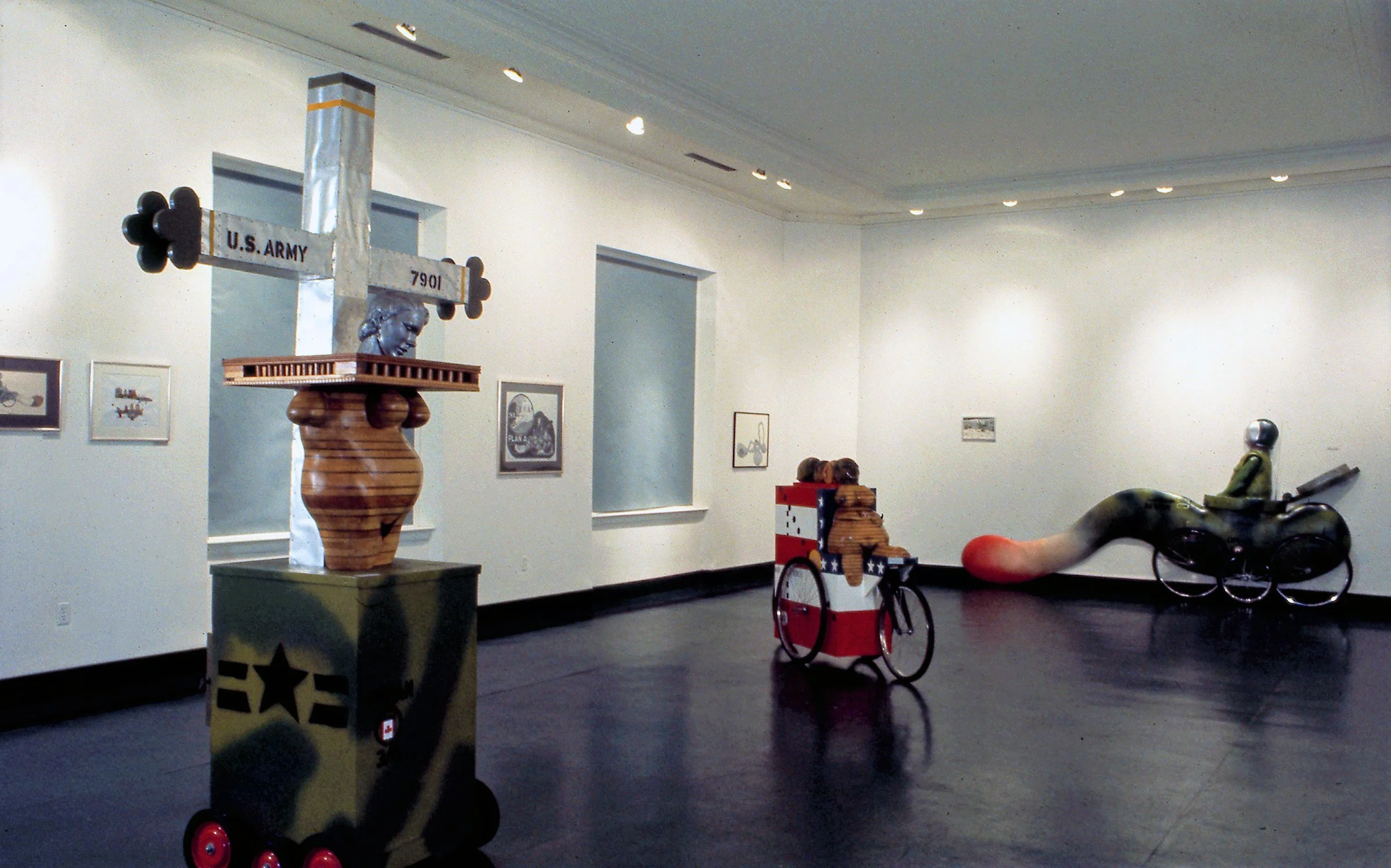
The Invasion of Canada, 1969, McIntosh Gallery, London, Ontario, photo: Ian MacEachern
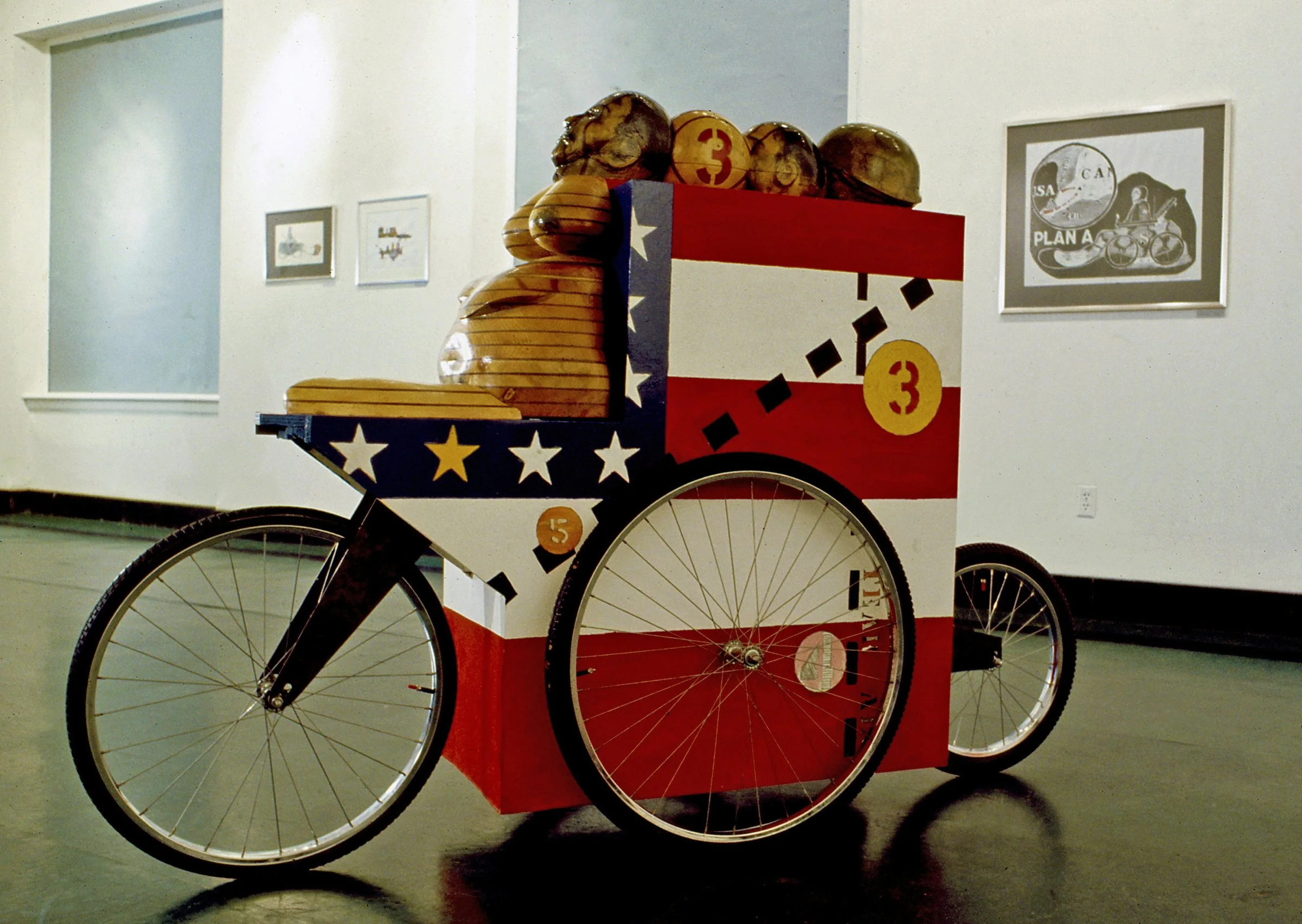
American Flocking Machine, 1969, mixed media sculpture, photo: Ian MacEachern
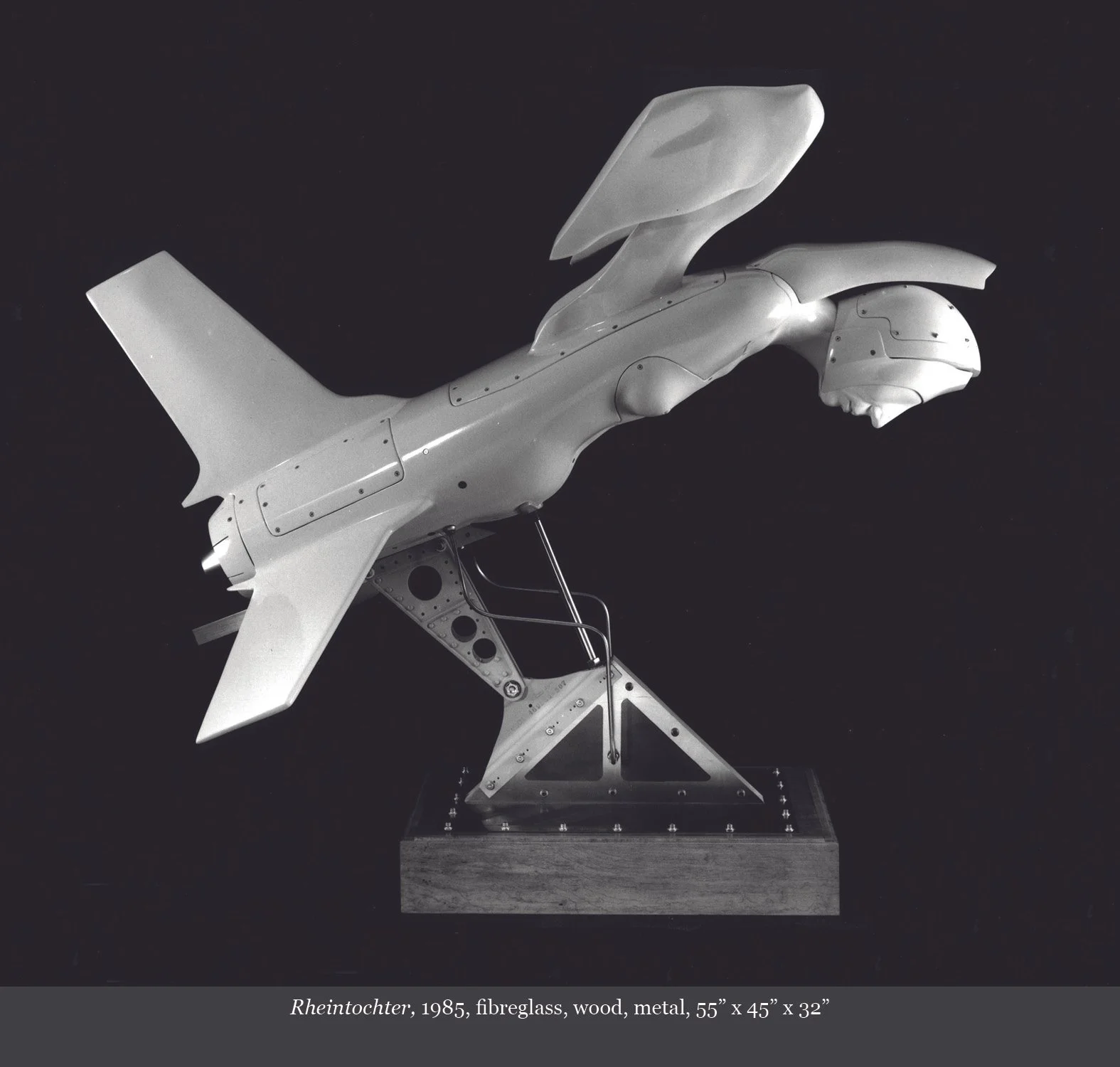
Dark Angel (1981) has a sixteen-foot wingspan and is built primarily from fibreglass moulding with aluminum panels and metal wings. It is derived from the Cutlass F7U-1 built by Chance Vought Aircraft Company in the early fifties. Only a limited number were produced and they were deemed obsolete a few years later, but I feel this aircraft best portrays the engineering aesthetics of the period.
The Russian MIG-29 is one of the most beautiful and effective fighter aircraft ever made. It first took flight in 1977 and is still in active duty today. As art, my sculpture goes beyond being simply a representation of it. I am not just making a MIG; it’s something more than that. I put the human body there, and not just as a figurehead, but as an integral part of the machine. I like to go from organic to geometric and from geometric to organic. But you don’t know which is organic or geometric. It is both. And it is both erotic and frightening at the same time. My work is a statement about how we look at technology, how we have always humanized our machines.
I refer to my flying machines as angels. Both angels and technology are misunderstood. Technology has the capability to kill and destroy, but it is humans creating those machines and pressing those buttons that bear full responsibility. So, like angels, technology is innocent, and like angels, it can sometimes go bad. It’s the struggle between good and evil.
Don Bonham

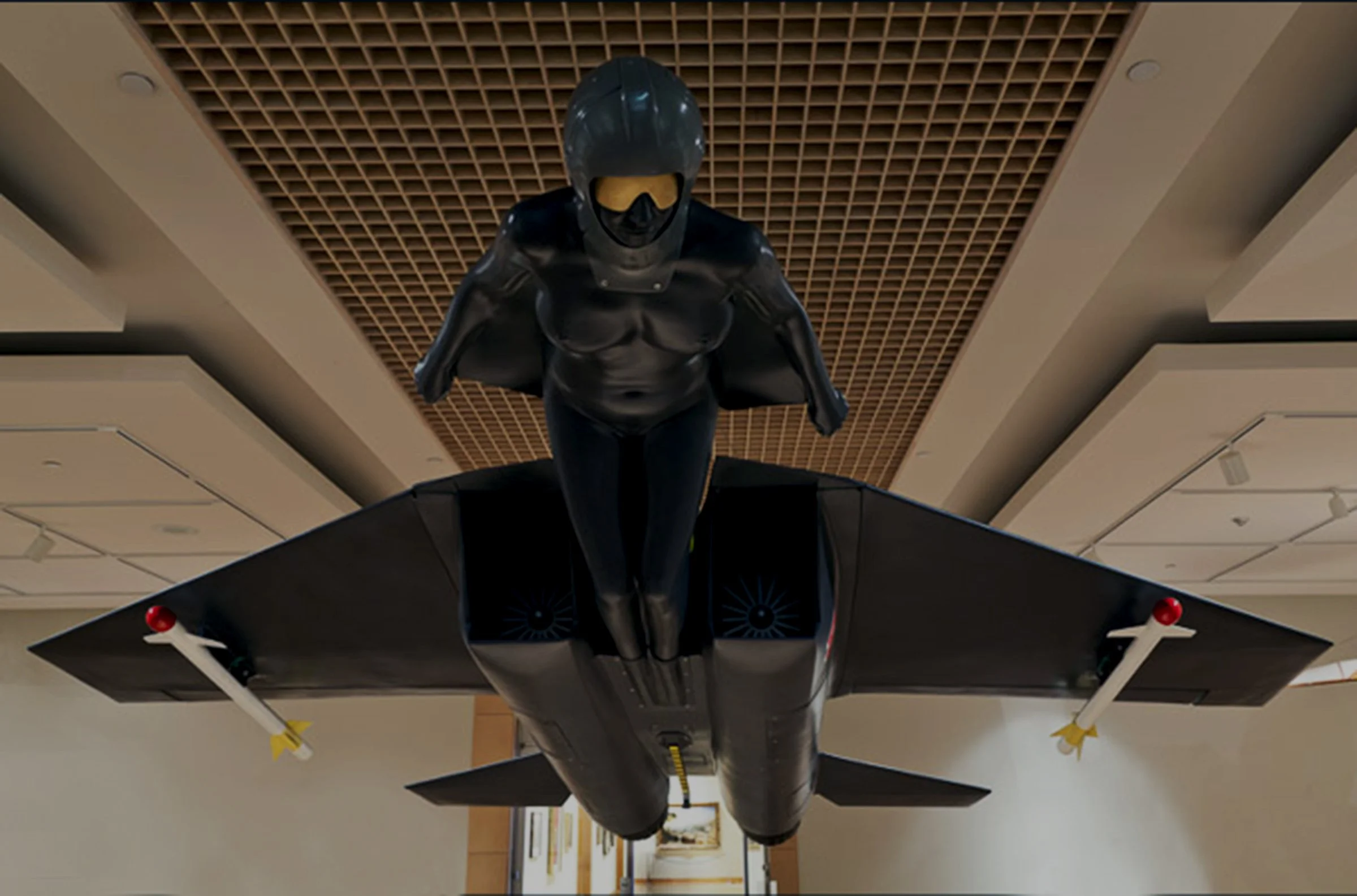
Top: Dark Angel, 1979-81, molded fibreglass, aluminum, wood, metal, hardware, aircraft cable, acrylic lacquer, 17’ x 11’ x 4’. Collection: Art Gallery of Hamilton, photo: Wendy Saby
Bottom: MIG-29, 2005, molded fibreglass, wood, metal, 15' x 16' x 5', photo: Roger Smith
I also made cut-out models of M.I.D.P.U. like you’d find on the backs of American cereal boxes. This whole series of work dealt with the American intervention in the Vietnam War and in the Canadian economy, and presented my vision of an imaginary invasion of Canada. The Invasion of Canada was my first one-man show. It was funded with a $600 grant from the Canada Council (the jury almost peed themselves laughing at the eight-foot penis) and was held at the McIntosh Gallery. Because London was such an uptight city, I made maps showing how the invasion would come up through Michigan to London. Some people thought it was humorous, others thought it was dangerous, and some people actually knew what I was doing.
Although I am totally opposed to war, I am fascinated by the mythology and beauty of the war machine. To me, war machines are very beautiful, absolutely aesthetically beautiful. Take a look at the P-51 Mustang, a WWII fighter plane, a good example of how war has elevated aircraft to the level of art. It seems odd, but war actually brings out the best of technology.