The Hermen Goode Aesthetics Racing Team
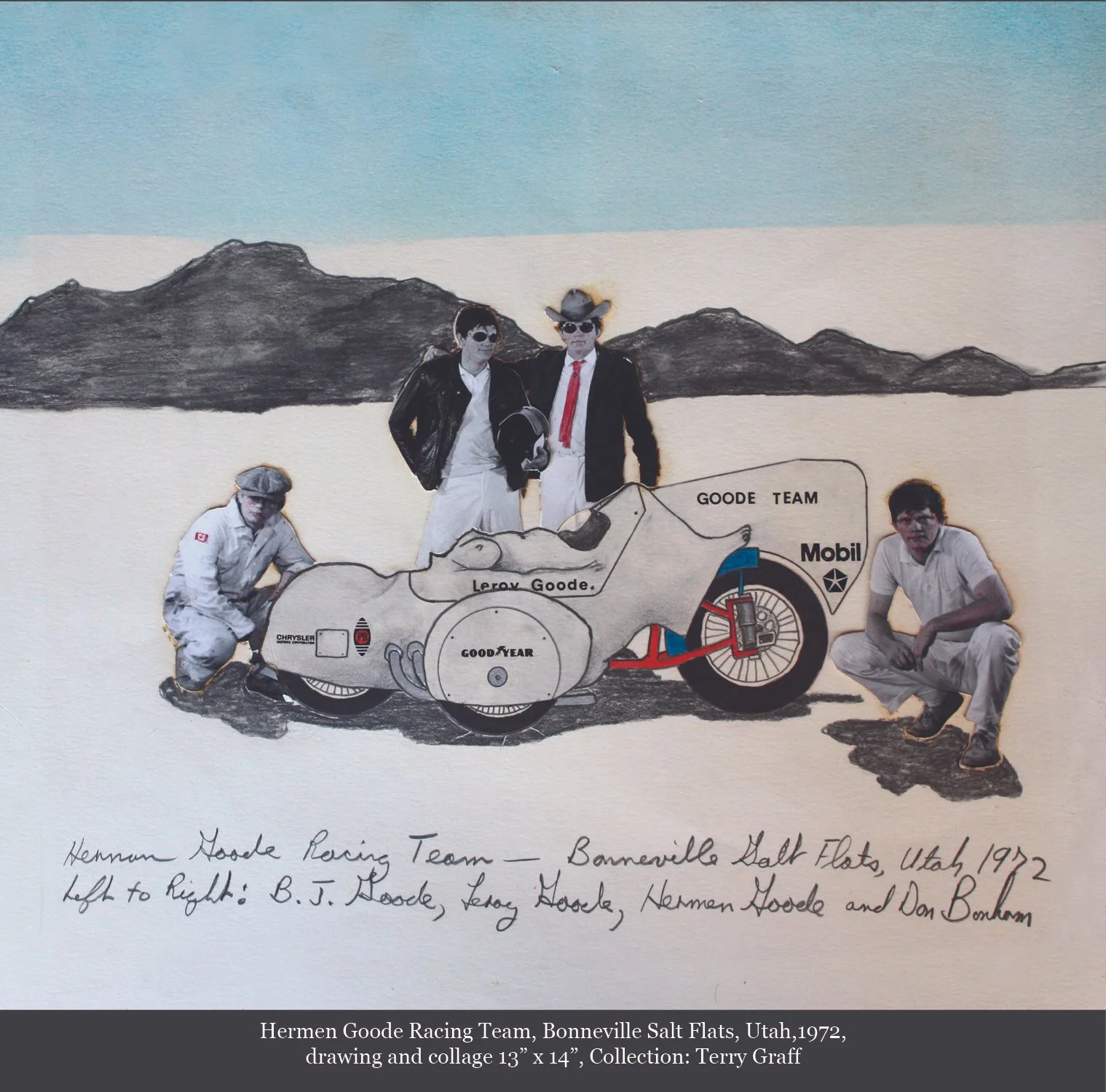
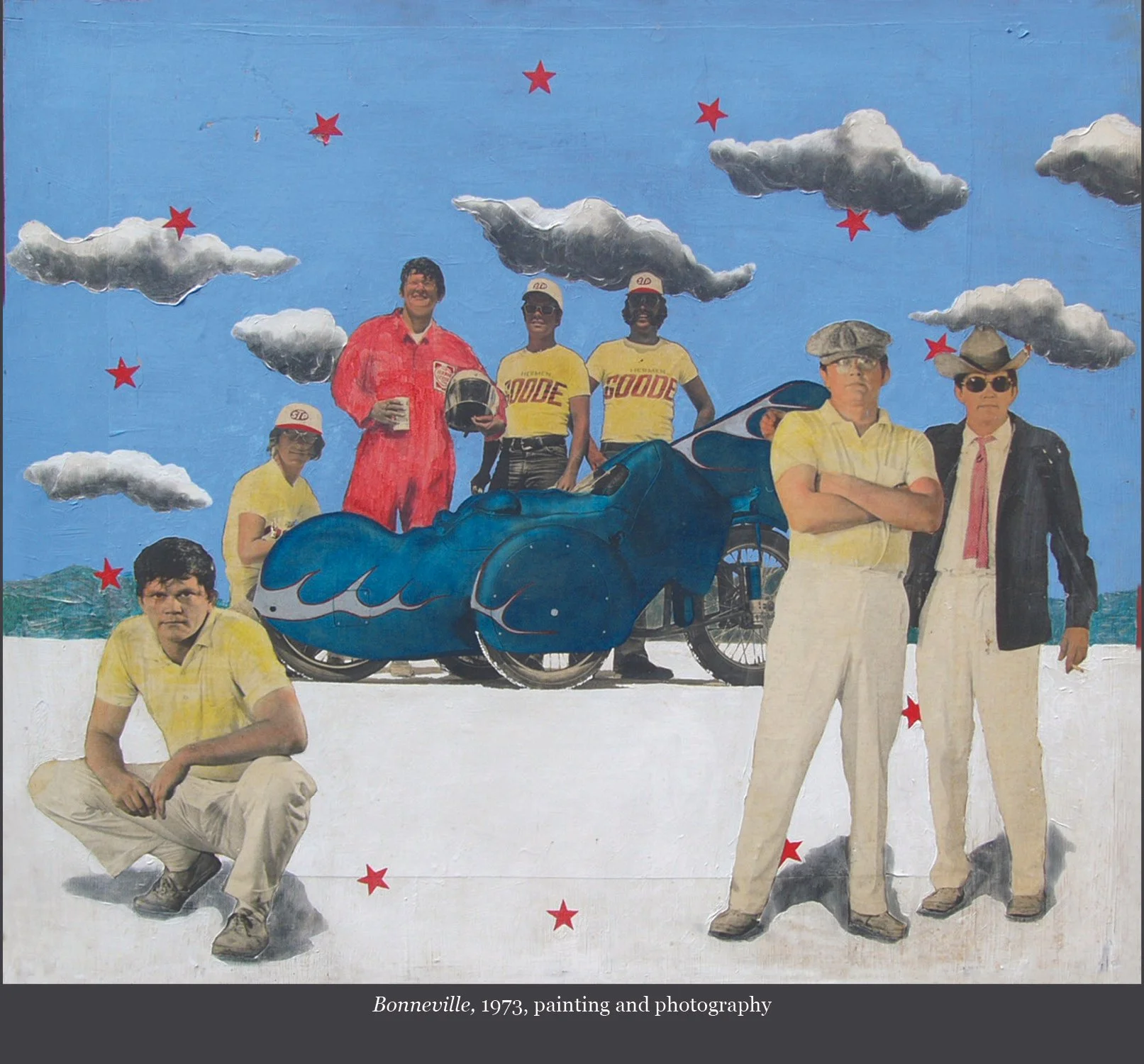
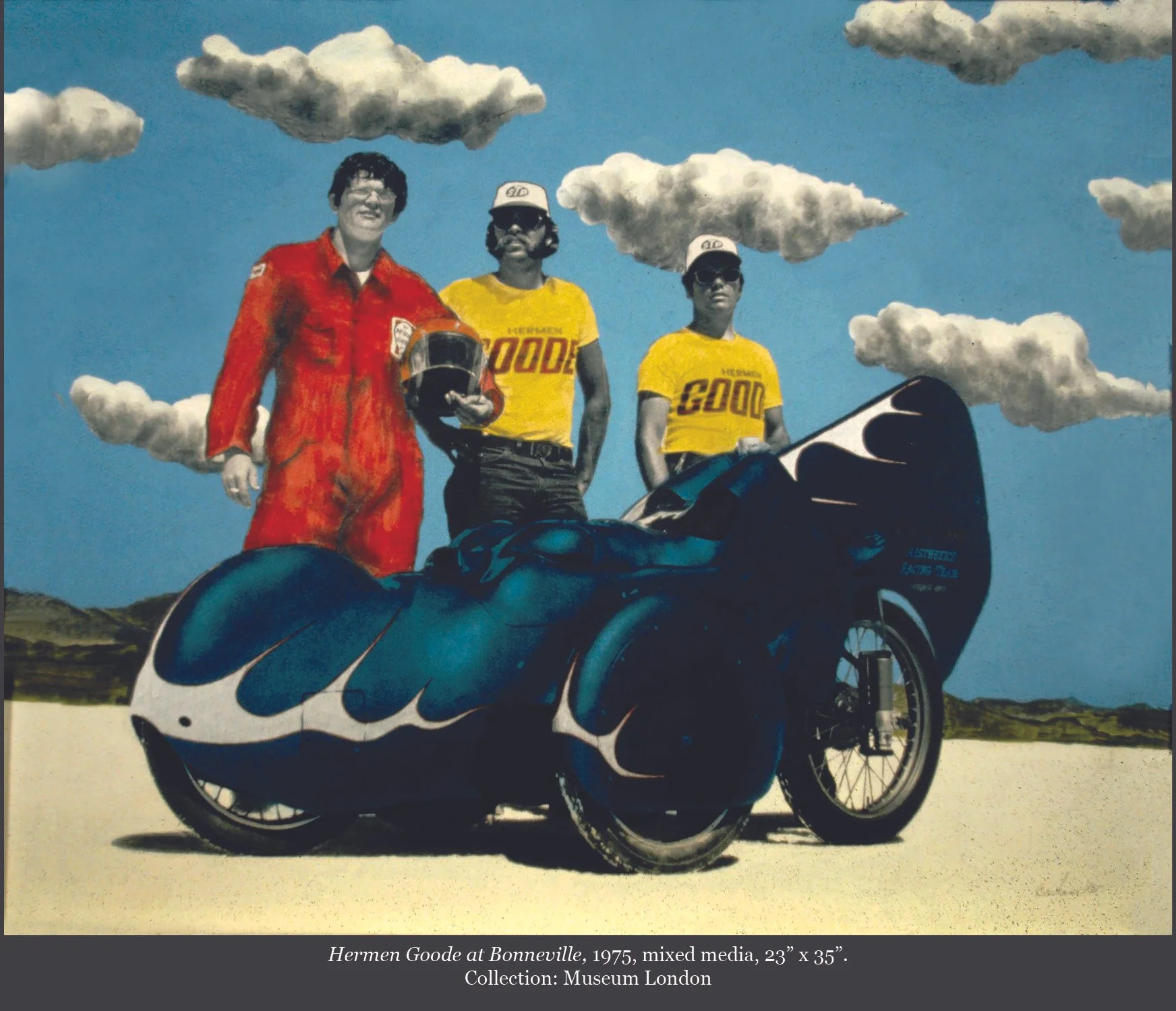
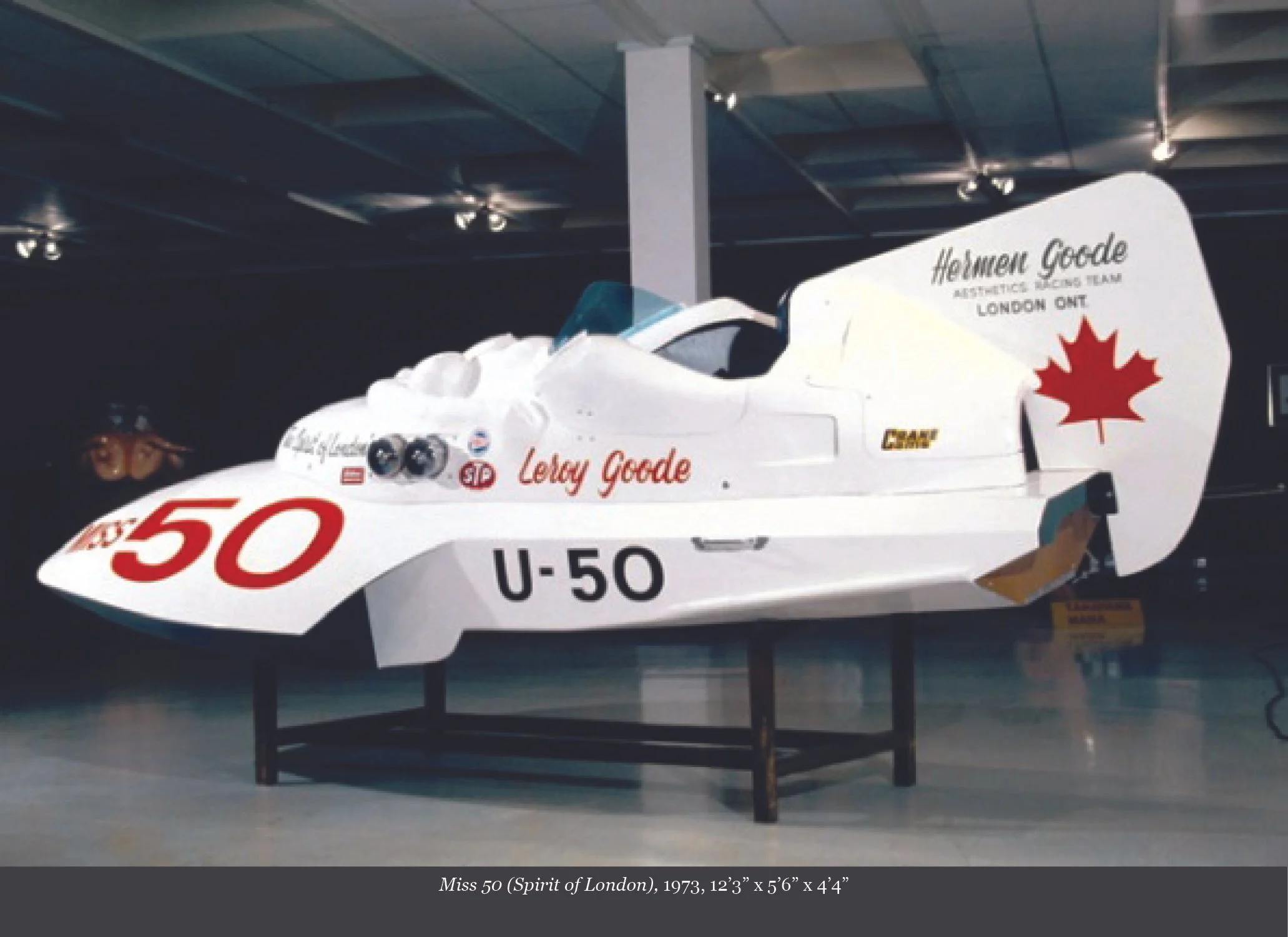
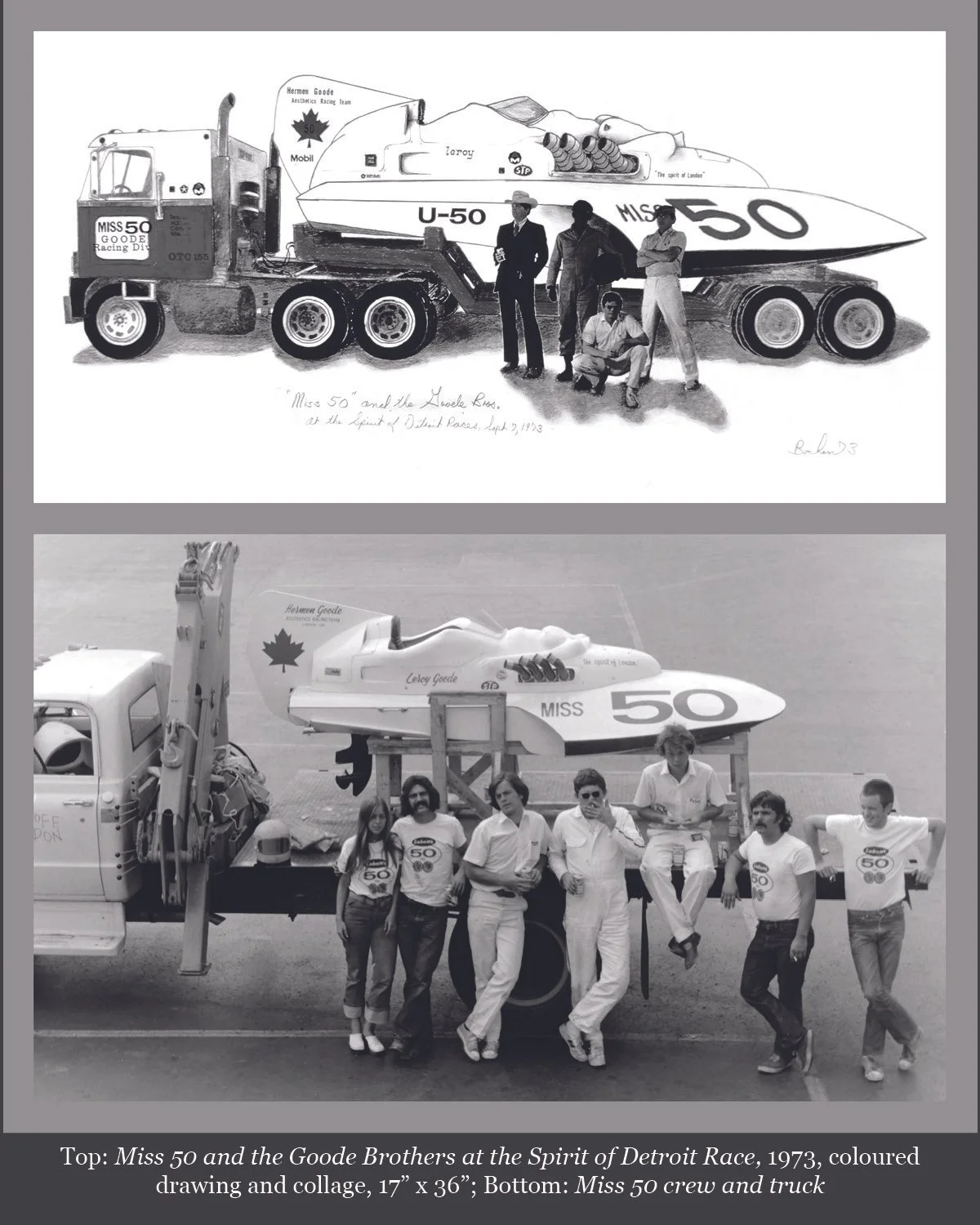
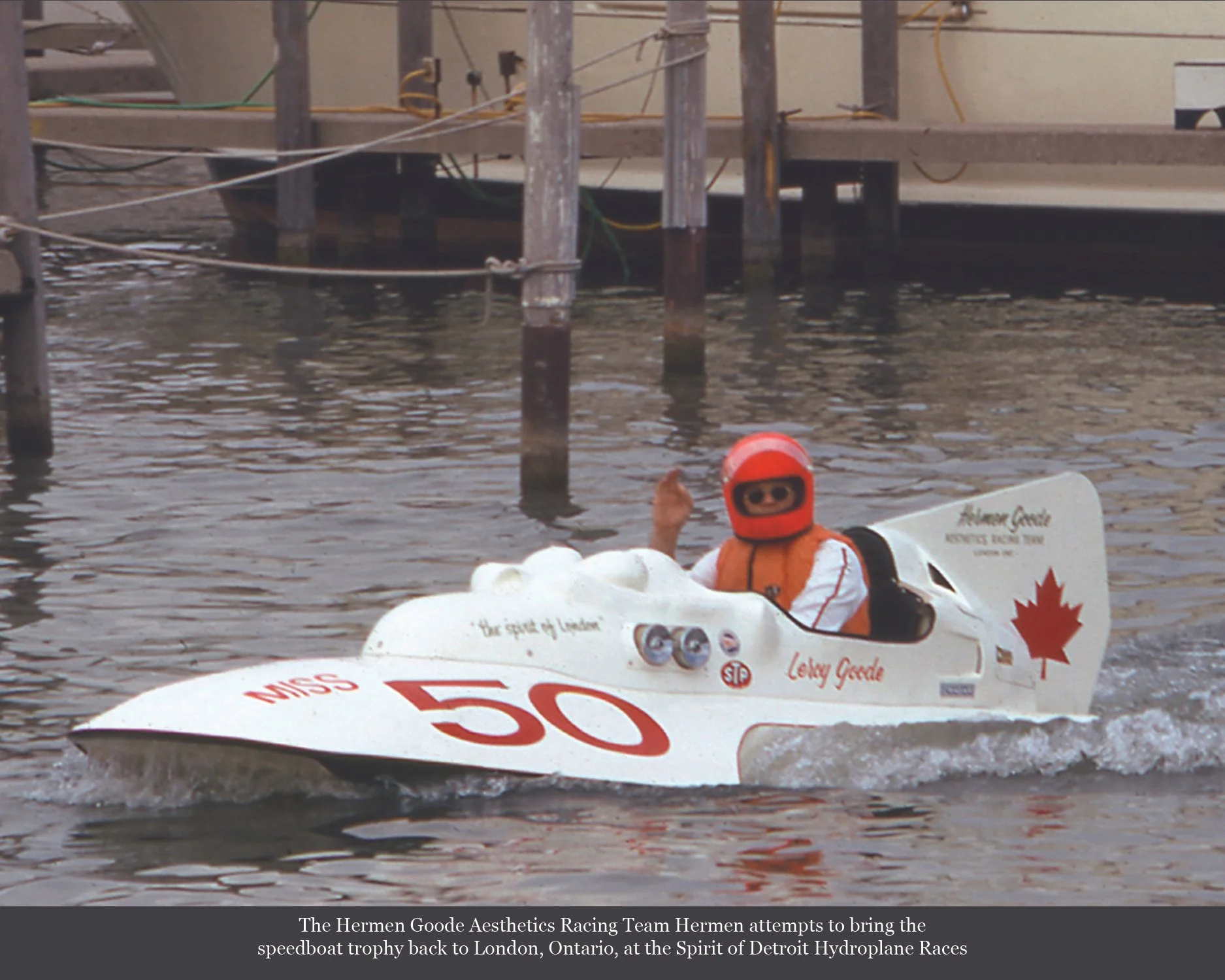
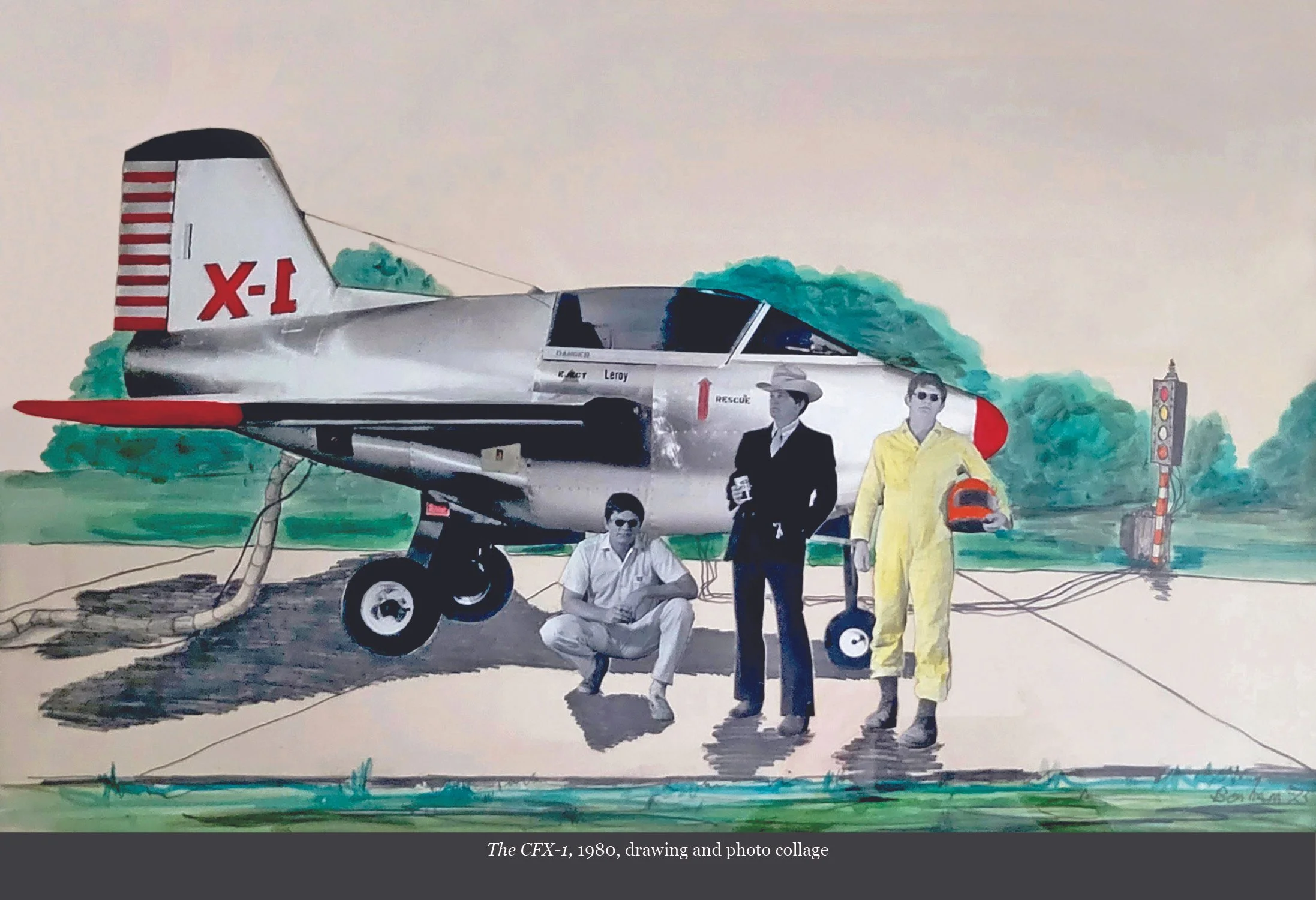
One of Canada’s earliest performance artists, Don Bonham enacted comical performances with his fictional Hermen Goode Aesthetics Racing Team (A.R.T.), which played off the “Wood Brothers,” NASCAR’s famous American stock car racing family. Created in 1970 in London, Ontario, the Team was owned and operated by the multiple personality or alter-egos of the artist (Hermen being a blend of the words “Her” and “Men”): Hermen, the major domo or manager and financier, who wore a ten-gallon hat and sunglasses and puffed on a cigar; B.J., the engineer, whose mechanical knowledge and ability made the racing machines technically possible; and Leroy, who piloted the machines at various professional racing events.
Bonham used his machines to stage public performances within real-life racing events, a highly convincing charade, not only due to his consummate acting ability and the exquisite design of his machines, but because he also had all of the promotional accoutrements – Hermen Goode Aesthetics Racing Team costumes with white trousers, red stripes, and STP baseball caps, along with overalls, T-shirts, jackets, canvas banners, letterhead, stickers, postcards, Pit Passes, etc. – and even showcased the Goode brand as signage on the side of his truck, a GMC stepside long bed that he acquired from the Canadian Forest Service in Quebec.
Blurring the line between art and life, Bonham explained that he had created the Hermen Goode Aesthetics Racing Team “because I raced cars on a dirt track when I was a kid, but I wasn’t very good. Out of the whole bunch of racers, you have one winner, and then you have the rest of us. The Hermen Goode Aesthetics Racing Team is the rest of us.”
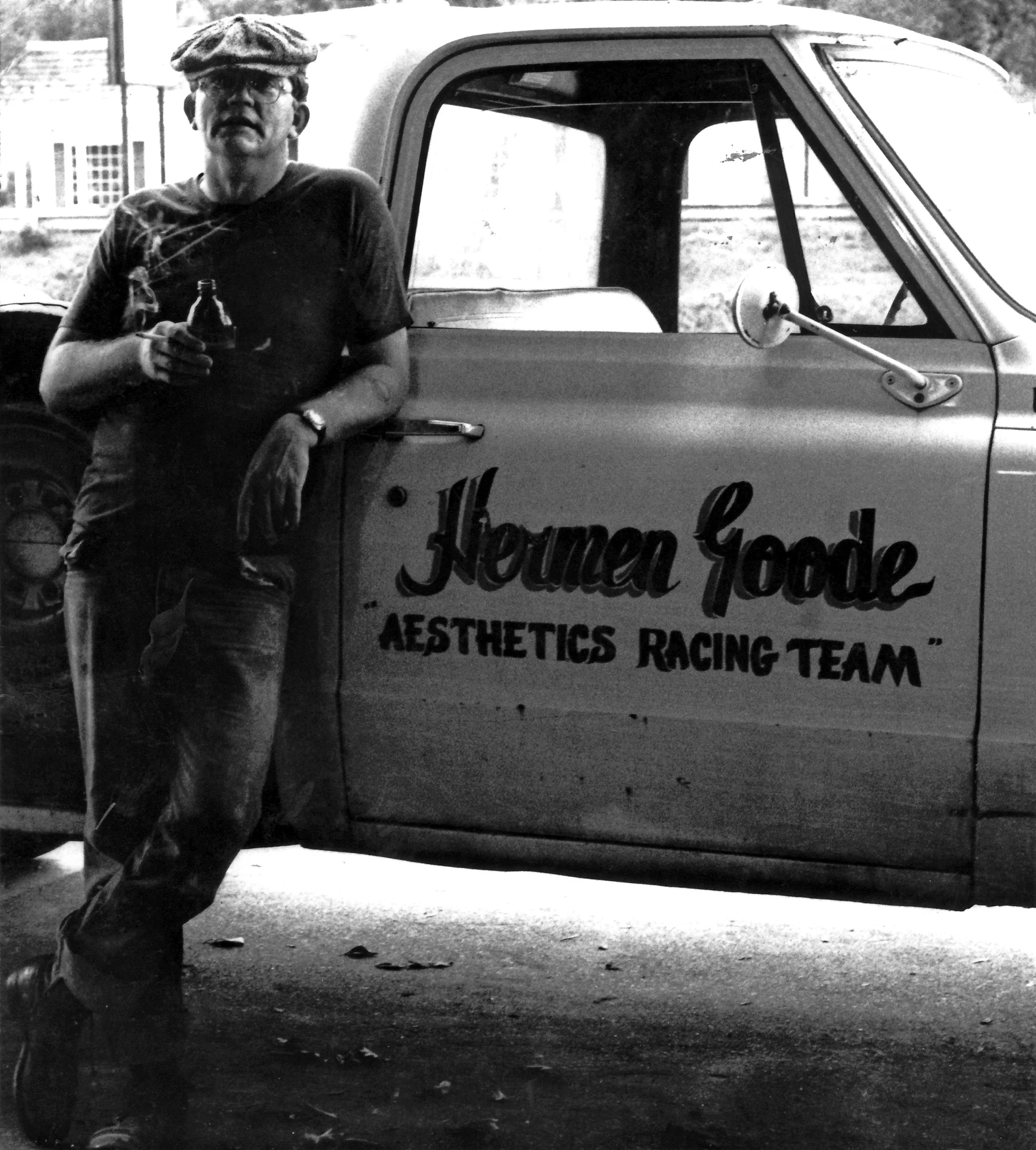
Don Bonham and the Hermen Goode Aesthetics Racing Team truck
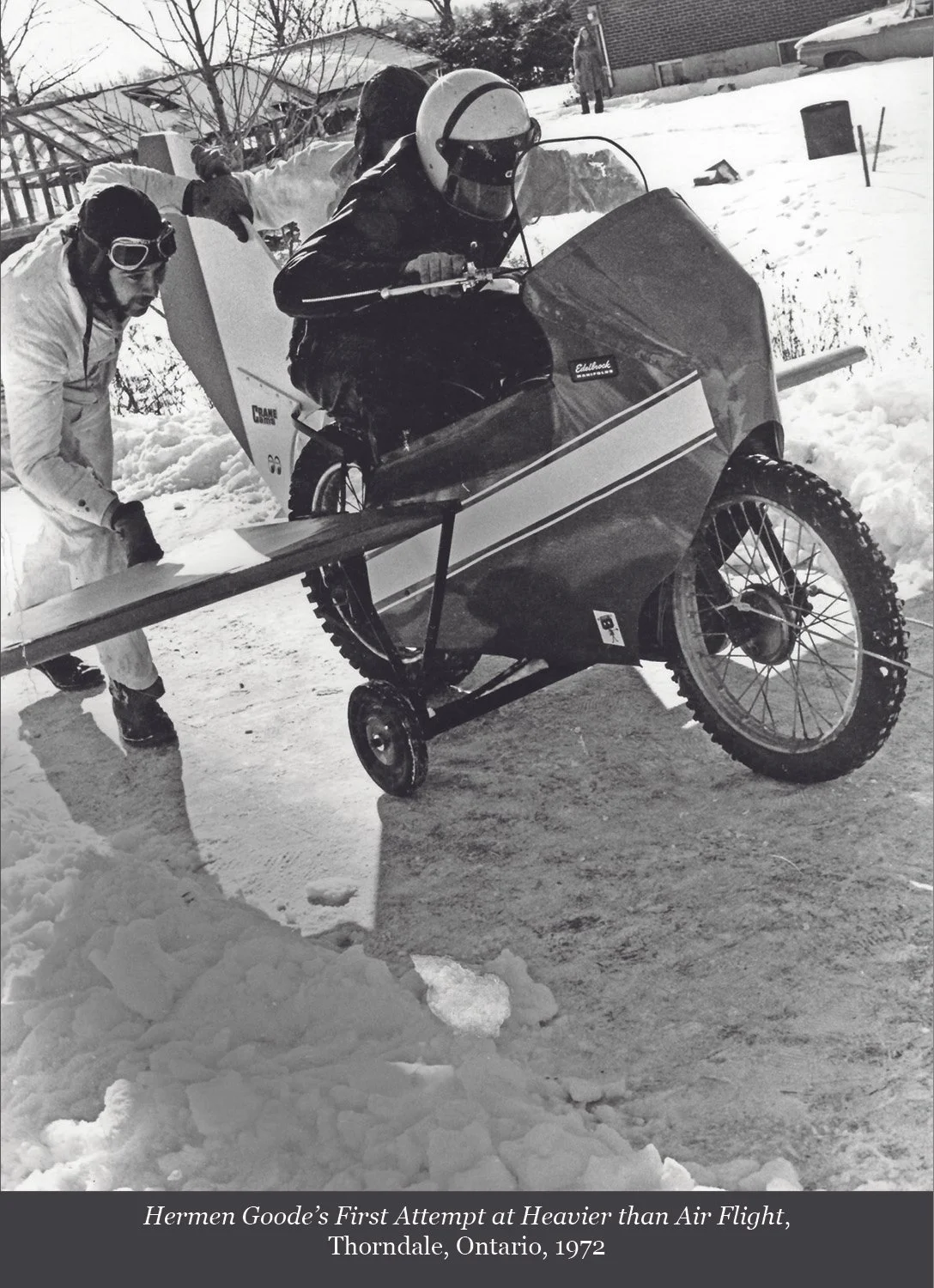
Hermen Goode’s First Attempt at Heavier than Air Flight (film and event), Thorndale, Ontario, 1972.
One of Bonham’s earliest performances was Hermen Goode’s First Attempt at Heavier than Air Flight. He built a flying machine with parts from several JAWA motorcycles for the purpose of shooting a film of it crashing. As he explained, “This was before Evel Knievel did his big jumps, although I was aware of him. It had wooden wings covered with cloth, but no motor. We made a runway that came off the top of Peter Borowsky’s barn in Thorndale, Ontario, about fourteen miles outside of London. I sawed the connection to the wings almost off so they’d break if there was any stress on them. We attached a cable to the machine, which you couldn’t see, hooked it to a pickup truck, and put a dummy of Leroy in the cockpit. The machine flew in the air and then crashed. The wings had folded and it was destroyed during landing. For the film, we pulled the dummy out, and I took its place, climbing up in the wreckage wearing a pair of racing goggles and a helmet. Then the guys sprayed lighter fluid all over the place, set it on fire, and dragged me out of the flames. It was another sad day for the Hermen Goode team, but Leroy had established an unofficial Canadian record of 24 feet 6 inches for heavier than air flying.”
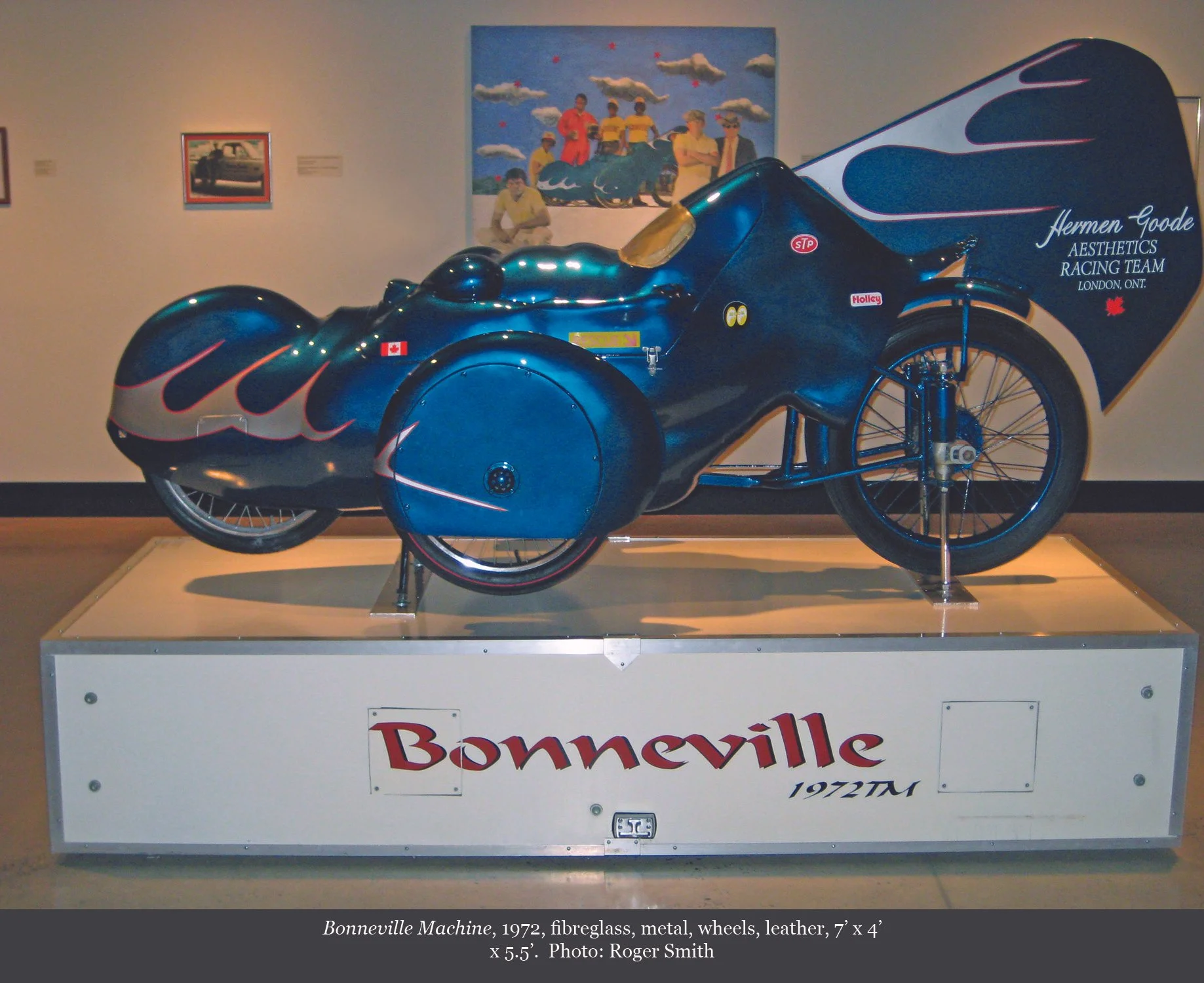
The Bonneville Machine, August 1972
In August of 1972, the Hermen Goode Aesthetics Racing Team journeyed to the Salt Flats, in Utah with the Bonneville Machine (1972) to participate as an official entry in the 24th National Speed Trials. The Bonneville Salt Flats is a 200-square-mile area east of Salt Lake City that is world famous as the place where drivers broke the Ultimate Land Speed Record from 1935 to 1970. The Hermen Goode Aesthetics Racing Team found inspiration in the cult figures associated with the dazzling white plain, like race car driver Craig Breedlove, a five-time world land speed record holder.
Accompanying Bonham to Bonneville was artist Graham Wright with his “anti-speed machine,” Tom “Mr. Hollywood” Benner, artist Becky Burke, cinematographer and film instructor Peter “Wiley Coyote” Crass, and sound man Lyndon Andrews. According to Bonham, “We were a team that was actually going to participate . . . We lived in the desert and we drank Coors beer and we worked very hard.” But unlike the other entries at the National Speed Trials, the Goode brothers invariably failed to qualify, as the Bonneville Machine had no engine.
Little Miss 50, 1973
After Bonneville, in 1973, the Hermen Goode Aesthetics Racing Team embarked on a new goal: to compete at the Spirit of Detroit Hydroplane Races to bring the speedboat trophy back to London, Ontario. Bonham recalled the event: “I was out there on the Detroit River, and we had a tiny 7½ HP Mercury engine hidden in the boat, and when I turned it on upstream, the current was about seven knots, and that’s about as fast as it could go. Suddenly, I was taking on water and thinking holy shit. So, I turned back toward shore. When we did the film, Hermen Goode and the Famous Miss 50, we got the sound of the engine cutting out and me coasting up, and some people helping me out. It was another sad day for the Hermen Goode team.”
The Rocket Machine and Test Flight of the CFX-1
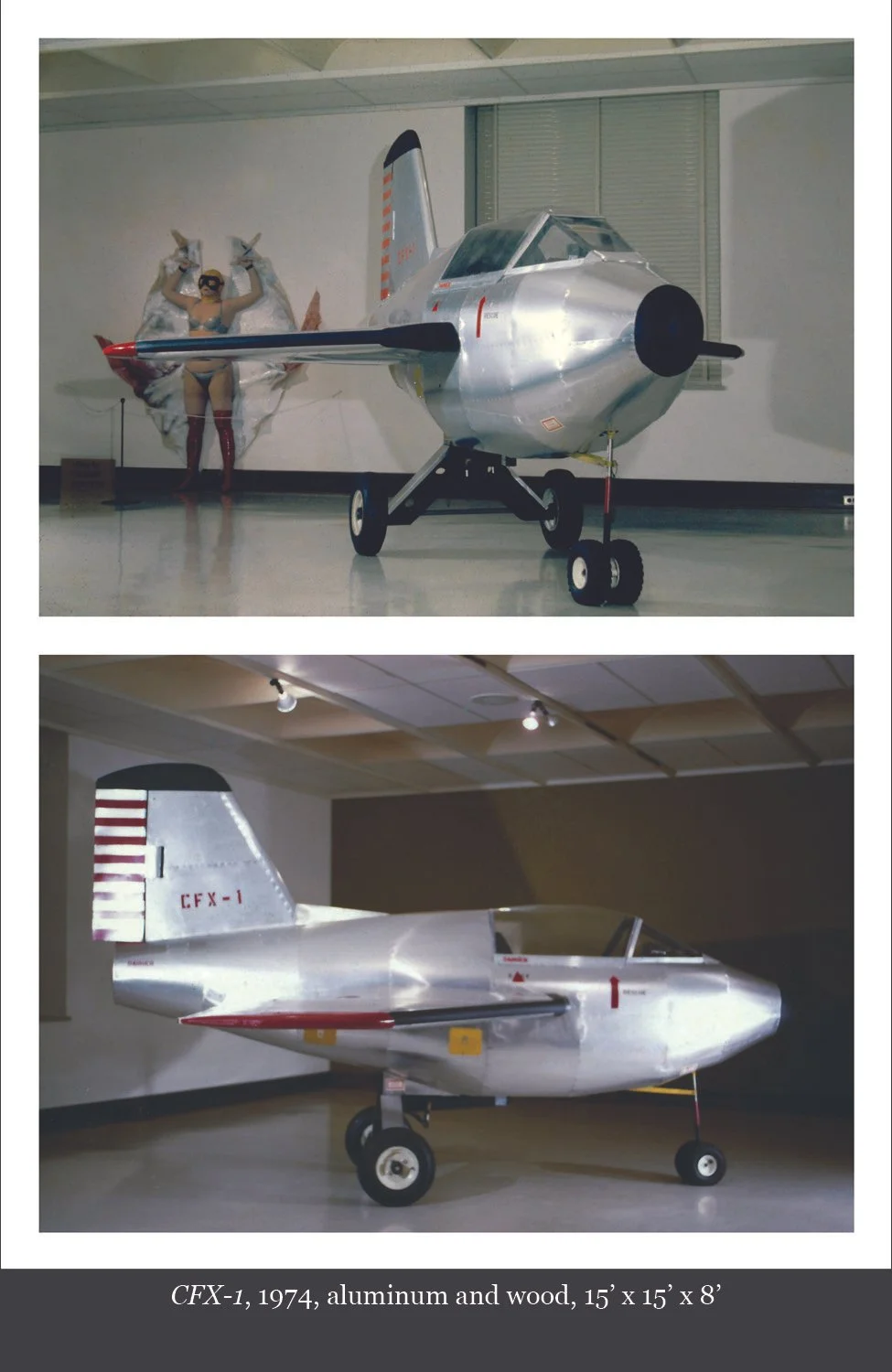
In 1974, the Hermen Goode Aesthetics Racing Team set about to create the CFX-1 or Rocket Machine, a short-landing, short- takeoff aircraft with low fuel consumption. The Team utilized the original design of the Messerschmitt Me Komet 163, a rocket-powered fighter aircraft that was one of the most remarkable of the Wunderwaffen (wonder weapons) produced by Nazi Germany during World War II. Designed to intercept Allied bombers, early prototypes of the small and stubby, but dangerous, rocket plane far exceeded the speed of all World War II fighters, clocking an impressive 340 miles per hour in recorded flight tests. However, the legendary German Komet was prone to blowing up when hit by enemy fire because of the volatility of rocket fuel. Nevertheless, it went on to heavily influence Western and Soviet aviation and rocketry in the Cold War years.
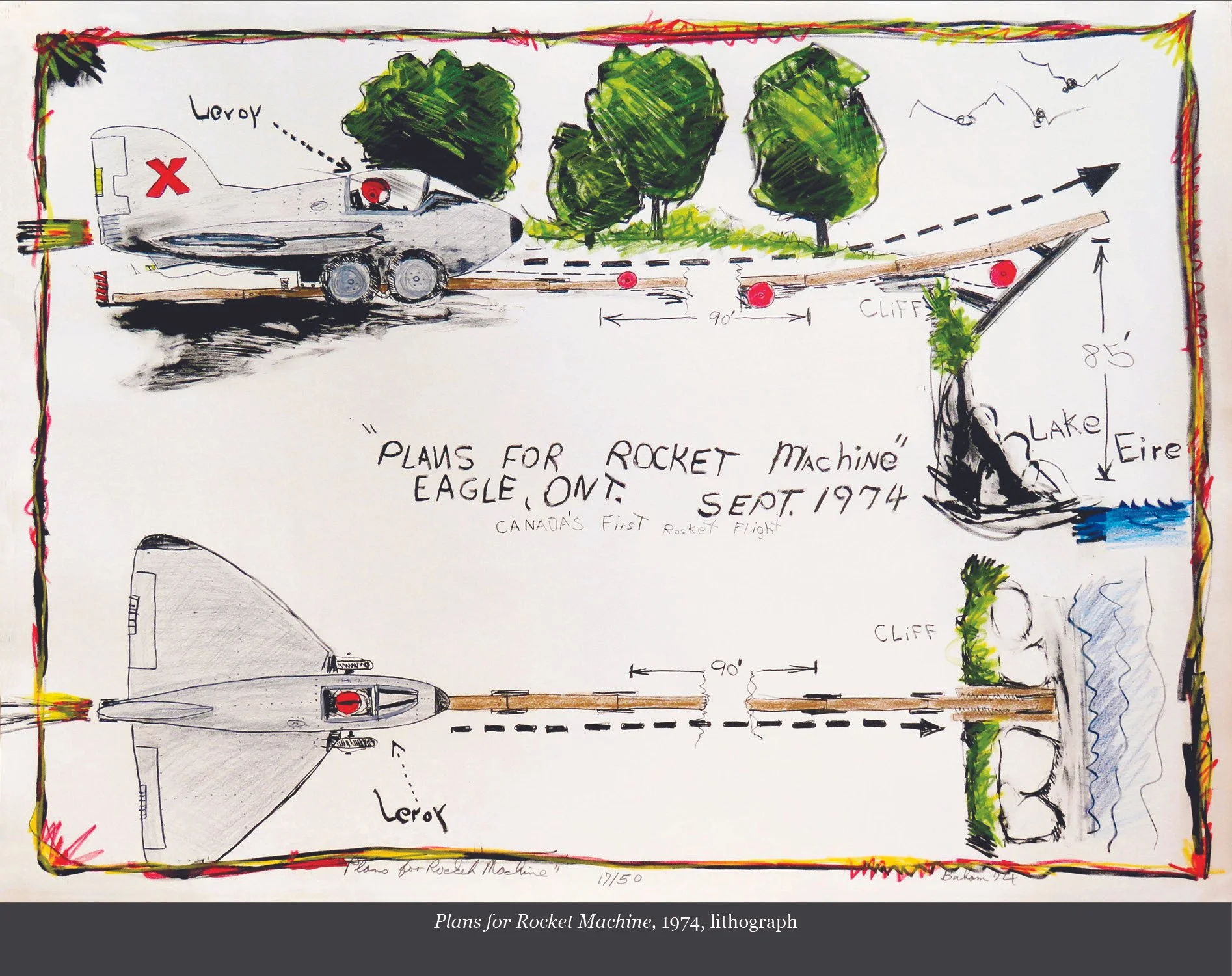
Bonham’s lithograph Plans for the Rocket Machine (1974) presents both a side and bird’s-eye view of his Rocket Machine (1974) ready for takeoff over a 90-foot runway to a cliff and into Lake Erie. The print’s date of September 1974 was the very month and year that the American stunt performer Evel Knievel failed an attempted jump across Snake River Canyon in his steam-powered, rocket-shaped “Skycycle.” But Bonham’s Rocket Machine was never launched, as Hermen Goode explains:
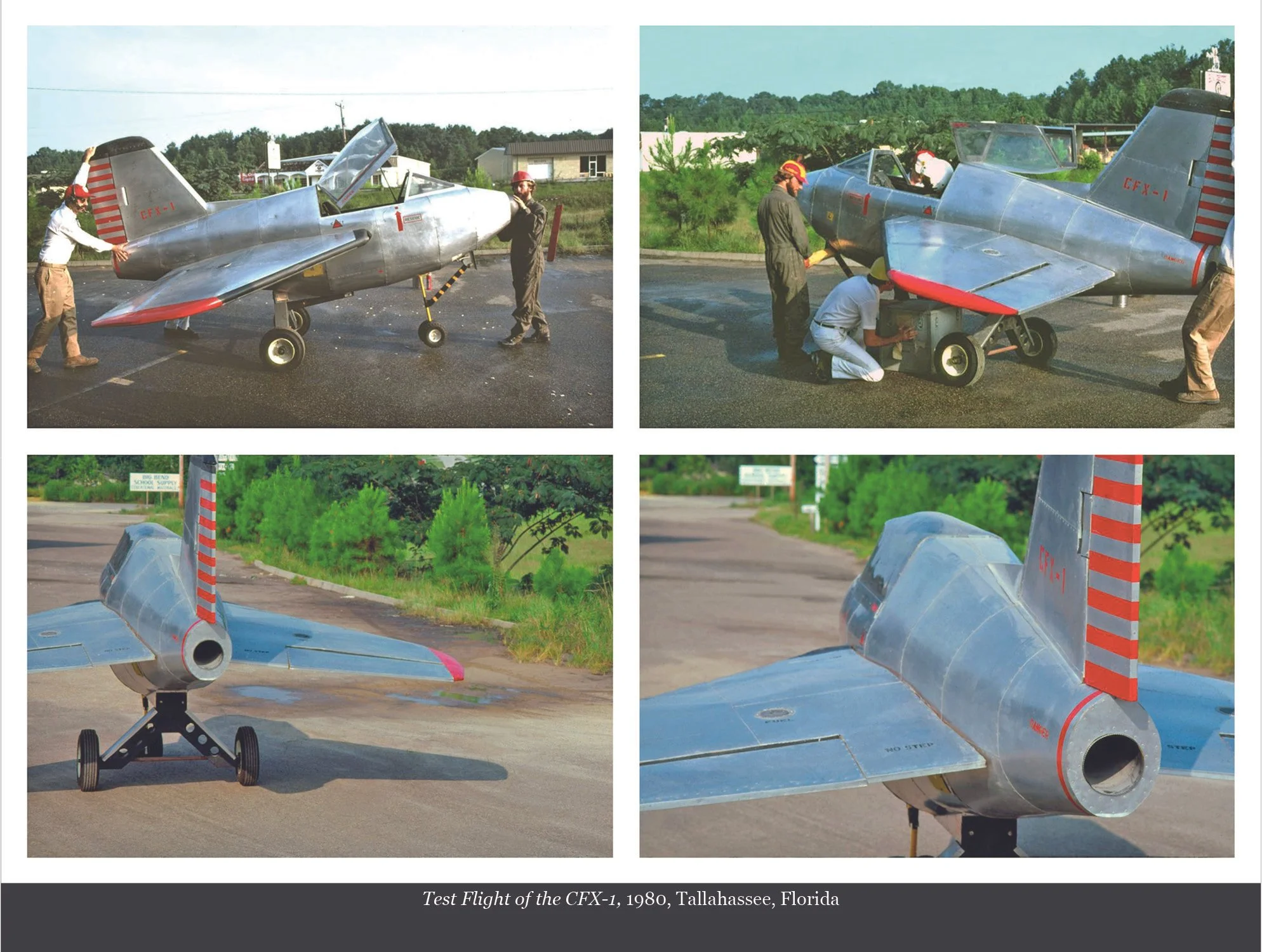
“I had started building this aluminum aircraft that looked identical to the German Komet, but in 1974 the fuel crisis hit. Our plans were delayed and I spent most of 1975 researching aviation design at the Smithsonian and the Air Force Museum at Dayton. I also looked at a lot of Air Force magazines and was buying a lot of model kits. This is a way we’ve found to solve many of our fabrication problems. We buy model kits and look at them very closely. Finally, in the Spring of 1980, the aircraft was completed and the Team held the first testing in Tallahassee, Florida. We went out to launch it, but I had no money, no money at all. So, we took still cameras. And we shot the pilot getting in and what not, all in stills. We wanted to make a short landing and a short take off in a short land aircraft to challenge Air Canada and win the mail route from Potsdam, New York, to Montreal. We wanted to show the mail service that we could get the mail there faster and cheaper with our one-man aircraft. However, the test flights were negative, to say the least. No further testing was planned and the aircraft was destroyed.”
Project C-32
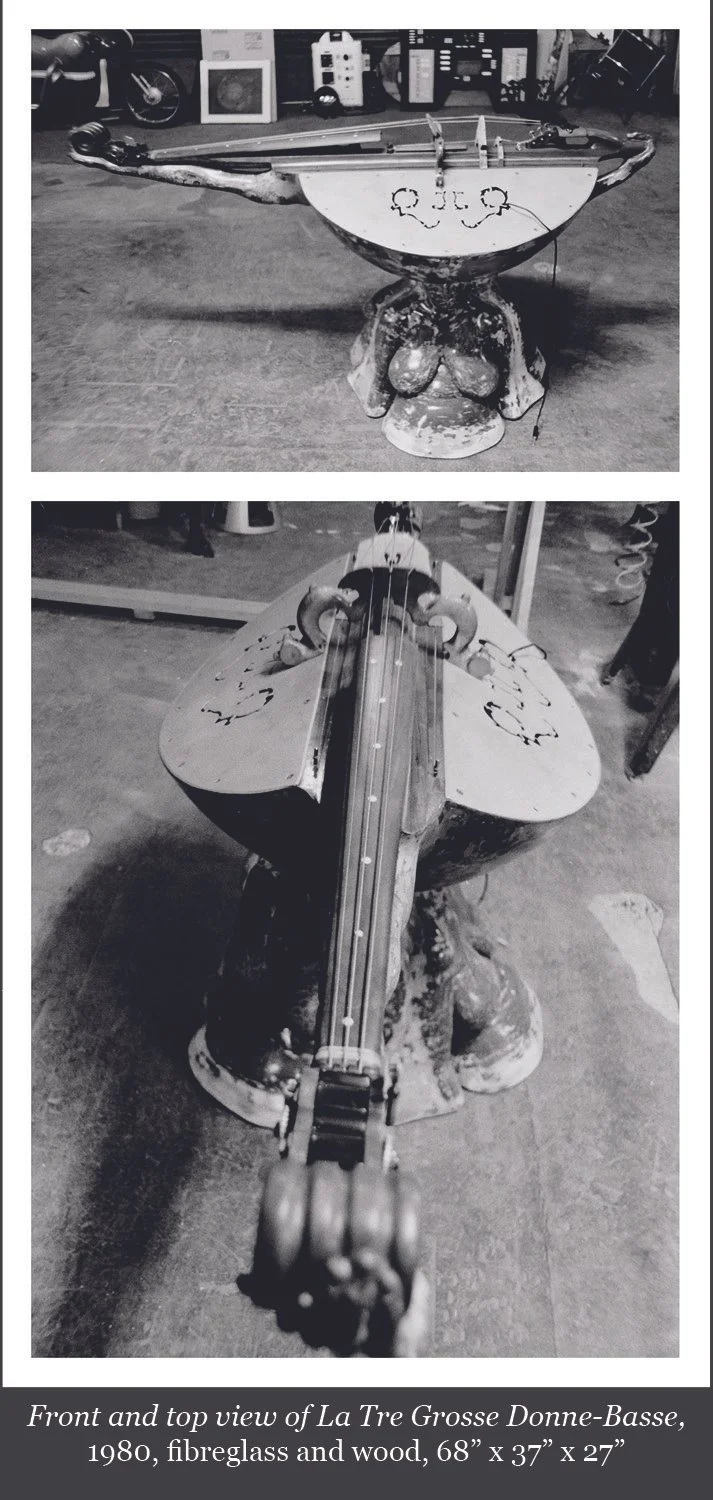
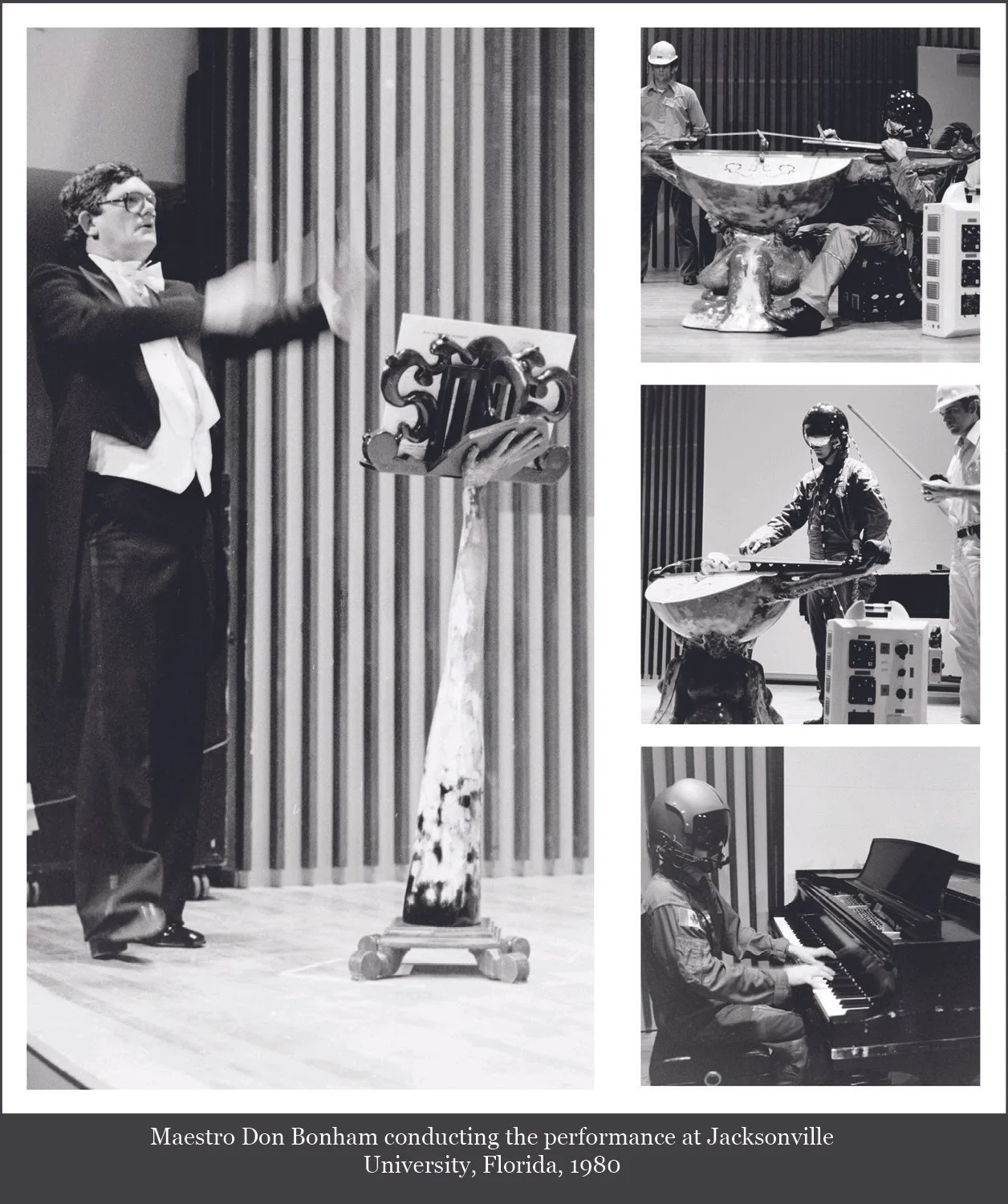
The very last Hermen Goode project was unlike all of the others. It did not involve a vehicle, or a race, but was a surreal musical sculpture/performance, “an exploratory probe into the realm of music/technology” called Project C-32. Enlisting the assistance of Dr. Michael Kasha, who was a classical guitar designer and a molecular biophysicist, Bonham created a futuristic cello-like stringed sculpture-instrument that he called La Tre Grosse Donne-Basse (1979). Three cast female torsos supported the body cavity of the unusual instrument from which extended arms at both ends that supported the neck. Painter Lynn Donoghue was the model for the torsos, which were recycled from a work from the early 1970s, as Bonham would sometimes revisit earlier works. It was originally a wall work comprising two body casts with motorcycle wheels that he cut at the midsection and joined to a third cast to form the base for the instrument. The sounding boards were made of heavy aluminum, which were drilled, sandblasted, and polished, and the woodwork was finely finished. The fibreglass was not painted, but was polished and left in its natural colour state after hardening, as well the auto body filler that was used to smooth the surface texture and fill small imperfections and joints. The ejection seat from his Rocket Machine was also incorporated into the assembly, and to conduct the performance, Bonham also created a music stand that combined two castings of a forearm to achieve the appropriate height.
For its debut at Jacksonville University, Florida, in 1980, Bonham’s apprentices became the technicians of the Goode Engineering Team and fully participated in the staging of the performance/event. In 1981, Bonham was invited to present Project C-32 at Toronto’s Harbourfront Art Gallery and enlisted real musicians, who created an original composition for the instrument.